





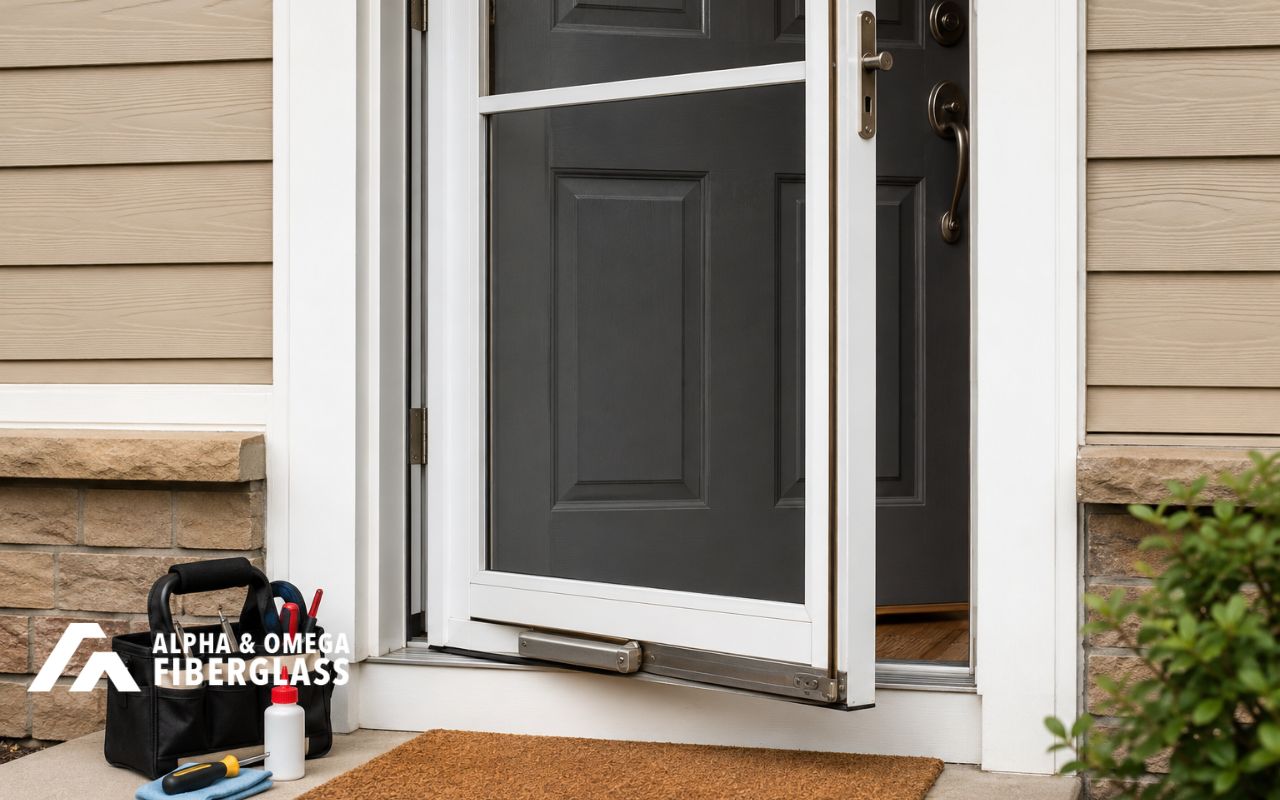
What storm door maintenance checklist keeps homes protected?
At Alpha & Omega Fiberglass, we know a storm door works best when small care tasks happen before damage starts. Therefore, this guide helps you check seals, hardware, alignment, and surface wear so your entryway stays secure, smooth, and ready for changing weather.
What storm door maintenance checklist keeps homes protected?
A storm door maintenance checklist keeps homes protected by guiding seasonal checks for seals, hardware, alignment, surface damage, and smooth operation. It helps prevent drafts, moisture problems, rust, sticking, and early replacement while keeping the entryway safer and more comfortable year round.
Protect Your Entryway With Simple Seasonal Door Care
Seasonal storm door care protects your entryway by helping you find loose hardware, worn seals, dirty tracks, and small damage early. Therefore, a few checks every few months can support better comfort, smoother movement, and longer service life.
Alpha & Omega Fiberglass recommends starting with a quick visual check. First, open and close the door slowly. Then, listen for squeaks, scraping, or a weak latch.
Also, check the frame, glass, screen, sweep, and threshold. Small signs often reveal bigger concerns. For example, peeling paint can expose material to moisture. Meanwhile, a loose latch can weaken daily security.
Check the frame for dents, rust, cracks, or gaps.
Open and close the door to test smooth movement.
Look for loose screws around hinges and handles.
Clean dirt from the sill, tracks, and lower edge.
Schedule help when the door feels unsafe or badly damaged.
According to ENERGY STAR, sealing air leaks and adding insulation can provide up to 10% annual energy savings. Therefore, a tight storm door seal can support better home comfort.
When a door is bent, cracked, or no longer closes squarely, routine care may not be enough. In that case, review our professional door upgrades for a safer next step.
Inspect Weatherstrips Before Drafts And Moisture Create Trouble
Weatherstrips should be checked before drafts, water, insects, and dust enter around the door. Therefore, a seasonal weatherstrip inspection helps protect comfort, reduce air leaks, and keep the door closing without extra force.
Start by looking along the top, sides, and bottom sweep. Then, search for cracks, flat spots, loose adhesive, missing pieces, or daylight around the edge.
Next, close the door and feel for moving air. Also, use a flashlight at night while someone stands on the other side. If light passes through, the seal needs attention.
The U.S. Department of Energy says weatherstripping should be applied to clean, dry surfaces above 20 degrees Fahrenheit. Therefore, mild weather is often the best time for this task.
During replacement, measure each side twice. Then, cut strips carefully and press them firmly into place. Also, make corners tight because open corners allow air and water to pass.
Key Takeaway: Seasonal door care and weatherstrip inspection help catch air leaks, loose parts, and moisture risks early. Therefore, simple checks can protect comfort before repairs become more difficult.
Clean Hardware Carefully To Keep Daily Use Smooth
Clean hardware keeps a storm door working smoothly by reducing friction, squeaks, rust, and latch trouble. Therefore, storm door hardware care should include gentle cleaning, screw tightening, and light lubrication on hinges, pivots, handles, and locks.
Dust, pollen, and moisture can build up around moving parts. As a result, the door may drag, squeak, or fail to latch well.
First, wipe hinges, handles, locks, and closers with a soft cloth. Then, use mild soap for fingerprints and grime. However, avoid harsh cleaners that may damage finishes.
Next, apply a silicone-based lubricant to hinges and latch points. Also, avoid thick grease because it can hold dirt. After that, move the door several times to spread the lubricant.
Tighten loose handle screws before the handle shifts.
Clean lock areas so the key turns without force.
Lubricate hinges when movement sounds dry or rough.
Check the closer so the door shuts without slamming.
Storm door hardware care is not only about sound. It also helps the door close evenly. Therefore, hardware checks can protect weatherstrips and reduce frame stress.
Correct Door Alignment Before Seals Wear Down Unevenly
Door alignment should be corrected when a storm door sticks, scrapes, slams, or leaves uneven gaps. Therefore, early adjustment protects seals, hinges, latch parts, and the frame from extra strain during daily use.
Misalignment can happen after regular use, house movement, or loose hinge screws. Also, seasonal changes can make tight areas more noticeable.
To check alignment, close the door slowly. Then, look at the space between the door and the frame. The gap should look even from top to bottom.
If the door rubs, tighten hinge screws first. If the problem remains, the hinge position may need careful adjustment. However, avoid forcing the door because that can bend hardware.
The U.S. Department of Energy recommends adding 5% to 10% extra material when measuring for weatherstripping measurement guidance. Therefore, accurate measuring helps avoid short strips and weak corners.
Door Sign Likely Maintenance Step The door scrapes the frame Check hinge screws and review alignment Air enters near the edge Inspect and replace worn weatherstrips The handle feels loose Tighten screws and clean the latch area The door squeaks Clean hinges and apply light lubricant Paint is peeling or rust appears Sand, prime, and refinish the surface
Key Takeaway: Hardware care and alignment checks help the door move correctly. As a result, the seals last longer, the latch works better, and daily use feels easier.
Refresh Door Surfaces To Reduce Weather Damage Year Round
Refreshing the storm door surface helps reduce damage from sun, rain, humidity, and temperature changes. Therefore, sanding, priming, painting, or refinishing worn areas can protect the material and improve curb appeal.
First, inspect the surface for peeling paint, rust, dents, cracks, and soft spots. Then, clean the door before any repair. A clean surface helps primer and paint bond better.
For metal doors, remove rust with a wire brush. Then, use a rust-resistant primer. For wood surfaces, sand rough areas and apply an exterior-grade primer.
Next, apply thin coats of exterior paint or stain. Also, allow each coat to dry fully. This prevents bubbles, uneven coverage, and early peeling.
A well-finished storm door can resist moisture better than a neglected surface. Therefore, surface care is a practical part of every storm door maintenance checklist.
Follow This Storm Door Maintenance Checklist For Seasonal Planning
A seasonal storm door maintenance checklist makes care easier because each season brings different risks. Therefore, spring, summer, fall, and winter checks help homeowners plan cleaning, sealing, lubrication, and repair before weather causes avoidable damage.
In spring, clean debris from the threshold and check seals after cold weather. Also, inspect glass, screens, and sweeps before heavy rain.
In summer, watch for swelling, fading, and dry hardware. Then, clean pollen and dust from hinges, tracks, and latch areas.
In fall, prepare for colder weather. Therefore, replace worn weatherstrips, tighten hardware, and touch up exposed surfaces.
In winter, test the door after freezing weather. Also, avoid forcing a stuck door because ice can damage seals and hardware.
Inspect seals and sweeps every season.
Clean hinges, locks, handles, and tracks.
Lubricate moving parts with a light silicone product.
Tighten loose screws before parts shift.
Check the latch and closer for safe closing.
Repair surface damage before moisture spreads.
Also, our team can guide you through larger exterior needs. Visit our home exterior services page to see how we help protect property surfaces.
Key Takeaway: Surface care and seasonal planning make maintenance simpler. Therefore, homeowners can protect the door from weather, reduce wear, and keep the entryway working well.
Compare Repair Signs Before Choosing Professional Door Support
Repair signs should be compared before deciding between simple maintenance and professional support. Therefore, homeowners can avoid wasting time on temporary fixes when the door, frame, glass, closer, or hardware needs deeper attention.
Alpha & Omega Fiberglass can inspect a door when wear affects safety, comfort, or daily use. Also, a professional review helps you understand repair options before choosing replacement.
Some issues are easy to handle. For example, loose screws, dirty hinges, and minor paint wear are often simple maintenance tasks.
However, cracked glass, bent frames, major rust, or repeated alignment failure need more care. In those cases, a storm door installation service may be the better long-term choice.
Choose maintenance when the door closes well and parts are intact.
Choose repair when one part is worn but the frame is stable.
Choose replacement when the frame, panel, or glass is unsafe.
Ask for help when drafts return after new weatherstrips.
If your door protects a business entrance, planning matters even more. Therefore, our guide on commercial entry planning can help property owners think through timing and door performance.
Frequently Asked Questions
How do I know my storm door needs maintenance?
Your storm door likely needs maintenance when it squeaks, sticks, leaks air, shows rust, or fails to latch. Also, check for gaps, peeling paint, and worn seals. For bigger problems, review our professional door upgrades.
When should I replace weatherstripping around my door?
Replace weatherstripping when it is cracked, flat, loose, brittle, or missing at the corners. Also, replace it when you feel drafts after the door closes. For related comfort tips, read our storm entry comfort tips.
What happens if I ignore loose storm door hardware?
Loose hardware can cause sticking, poor latching, uneven gaps, and faster seal wear. Over time, the door may shift and stress the frame. Therefore, tighten screws early or use our clear project process for guided support.
Why is my storm door hard to open or close?
A storm door may be hard to open because of loose hinges, dirt, misalignment, swollen material, or worn weatherstrips. First, clean and tighten parts. Then, consider help through our contact our team page.
How do I know when replacement is better than repair?
Replacement may be better when the frame is bent, glass is cracked, rust spreads, or the door will not seal after repairs. Also, replacement helps when security feels weak. Explore professional door upgrades for next steps.
Improve Year Round Protection With Reliable Door Guidance
Reliable storm door guidance helps homeowners choose the right next step with less stress. Therefore, Alpha & Omega Fiberglass is ready to help you inspect concerns, plan repairs, or discuss replacement through our contact our team page.
