





What Does Fiberglass Roof Drainage Inspection Reveal for Owners?
Water that sits too long on a flat fiberglass roof can turn a small drainage concern into a leak. When you notice staining, slow runoff, or debris near drains, schedule a careful review before the roof surface weakens. For related repair guidance, visit Fiberglass Roof Repair.
What Does Fiberglass Roof Drainage Inspection Reveal for Owners?
Fiberglass roof drainage inspection reveals whether water is moving off the roof, collecting near drains, or stressing weak areas. It helps owners find blocked roof drains, worn seals, ponding water, and early leak risks before damage spreads into the roof deck.
For many property owners, drainage inspection is a practical roof check that reviews drains, scuppers, strainers, slope, sealant, and water flow. It helps people with flat fiberglass roofs understand why water collects, where leaks may begin, and when a professional repair decision is safer than guessing.
Routine Checks Prevent Hidden Water Damage on Flat Roofs
Regular checks help prevent hidden water damage because small drainage problems often show up before active leaks appear indoors. A flat roof drainage evaluation can reveal debris, worn sealant, shallow slope, and standing water before those issues damage insulation or roof layers.
At Alpha & Omega Fiberglass, we look for practical signs that water is not leaving the roof correctly. These signs may include dark staining, soft spots, algae growth, or silt around a drain. According to FEMA, low-slope roof drainage systems may include interior drains, gutters, scuppers, downspouts, and emergency overflow drains.
Check drains after heavy rain.
Clear leaves before they compact.
Watch for water that remains too long.
Note ceiling stains or wall marks.
A simple record of inspection dates, weather, and visible concerns can help you decide when to request closer roof review.
Drain Components Direct Water Away Before Leaks Start
Drain parts work together to move water off the fiberglass surface before leaks start. The drain body, strainer, scupper opening, downspout, and sealant all need to stay clear, secure, and properly aligned during a fiberglass roof drainage inspection.
Most flat fiberglass roofs rely on slight slope and open drainage paths. When one part fails, water can collect near seams or low areas. Our team at Alpha & Omega Fiberglass checks whether water reaches the drain, whether the strainer is blocked, and whether sealant around the drain body looks cracked.
Drain detailing matters because the connection around the drain is a common stress point. To understand that area better, read Fiberglass Roof Drain Detailing. A clean drain opening cannot protect the roof if the surrounding seal is loose, split, or poorly finished.
Blocked Roof Drains Create Warning Signs Worth Reviewing
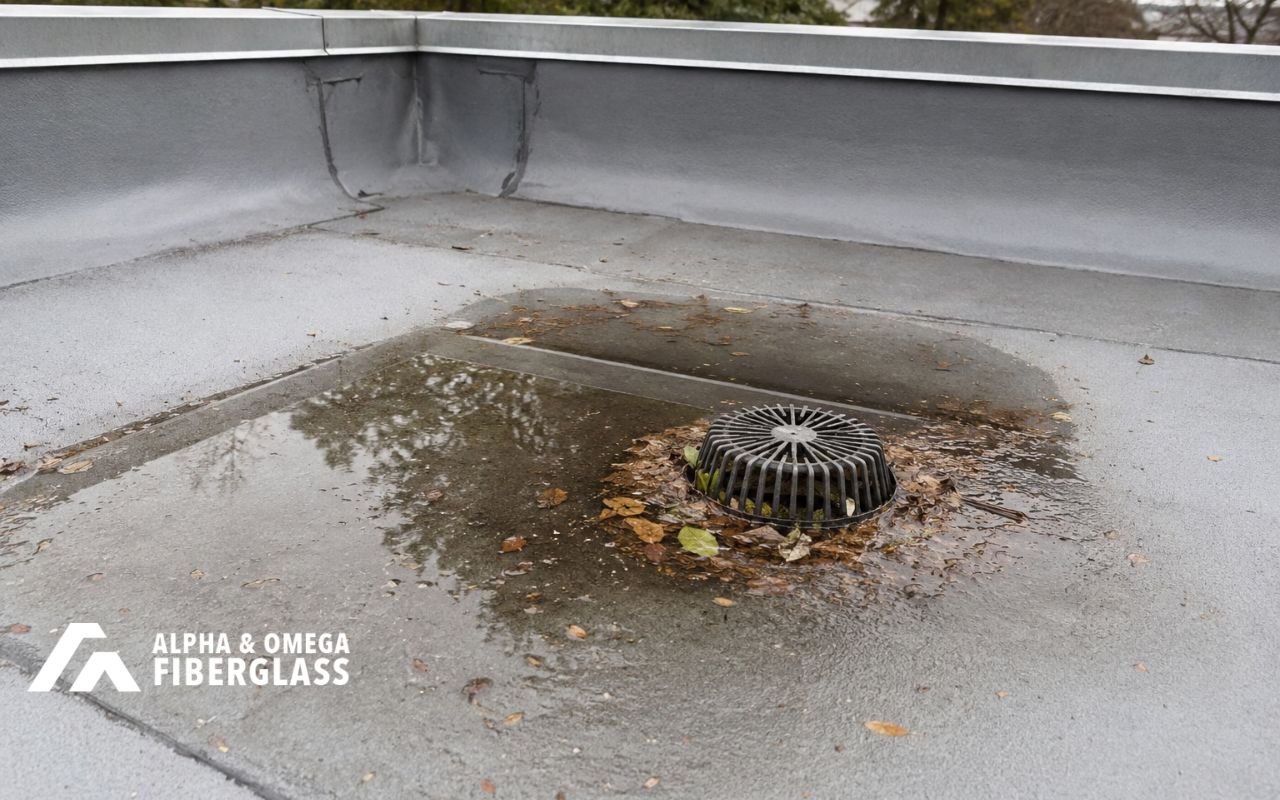
Blocked roof drains often create visible warning signs, including ponding water, stains, debris rings, slow runoff, and moisture near ceilings. These signs matter because trapped water can stress the fiberglass surface and increase the chance of leaks after storms.
Leaves, pine needles, dirt, and small twigs can clog a strainer quickly. After that, water may spread across the roof instead of entering the drain. During a review, we look for debris buildup, raised edges, damaged strainers, and marks that show where water stood.
Water rings around drains
Cracked sealant near joints
Soft or discolored roof areas
Overflow marks near scuppers
Indoor stains below roof drains
If water keeps collecting in the same area, review Fiberglass Roof Ponding Water Solutions. Standing water should not be ignored because repeated ponding can speed up wear.
Professional Evaluation Confirms Repair Needs Before Damage Spreads
A professional evaluation confirms whether drainage trouble needs cleaning, sealing, slope correction, or fiberglass repair. A fiberglass roof repair contractor can inspect roof layers, drain details, membrane cracks, and leak paths when DIY checks no longer explain the issue.
Some concerns should not wait. Ceiling stains, large cracks, soft decking, storm punctures, or water that returns after cleaning need careful attention. When customers contact Alpha & Omega Fiberglass, we explain what we can check and what information helps us understand the roof condition.
OSHA highlights fall protection as an important construction safety topic, so roof access should always be treated seriously. If the roof is wet, steep, high, or unsafe to reach, avoid climbing. Instead, gather photos from a safe location and ask for guidance. For related leak concerns, see Fiberglass Roof Leak Detection Methods.
Booking Our Inspection Prepares Your Roof for Safer Repairs
A clear booking process helps you understand what happens before any repair decision is made. During a fiberglass roof drainage inspection, we review the concern, inspect visible drainage points, explain likely causes, and discuss practical next steps without guessing.
With Alpha & Omega Fiberglass, you can expect a simple process focused on the roof issue you are seeing. We may ask about water stains, recent storms, roof age, drain locations, and whether ponding happens after normal rain or heavy rain.
First, we review the drainage concern.
Next, we inspect drains and nearby roof areas.
Then, we explain visible causes and risks.
After that, we discuss repair options when needed.
This process helps you feel prepared before work begins. It also helps reduce confusion about whether the problem is a clogged drain, a weak seal, a slope issue, or damage that needs repair.
Frequently Asked Questions
How often should fiberglass roof drains be checked?
Fiberglass roof drains should be checked at least seasonally and after major storms. Early spring and late fall are useful times because debris often collects then. A clear drain lowers the chance of ponding water, roof stains, and hidden moisture problems.
What causes water to pond on fiberglass roofs?
Water can pond because of shallow slope, settled roof areas, blocked drains, or poor runoff paths. When ponding repeats, the fiberglass surface may wear faster. For more detail, review Fiberglass Roof Ponding Water Solutions.
Can I clear blocked roof drains by myself?
You may clear light debris if the roof can be reached safely. Use gloves, non-slip footwear, and a soft tool. Do not climb onto wet, high, or unsafe roofs. When water still drains slowly, contact us through Contact Us.
When should I call a fiberglass roof repair contractor?
Call a fiberglass roof repair contractor when you see ceiling stains, large cracks, soft roof areas, damaged drain bodies, or ponding that returns after cleaning. These signs can point to deeper issues. Learn more at Fiberglass Roof Repair Norristown PA.
What tools help with a basic drainage check?
Useful tools include gloves, a sturdy ladder, soft broom, flashlight, small mirror, hose, and pliers. These tools help you see debris and test water flow. Safety matters most, so skip any roof check that feels risky.
Protect Your Roof Investment With Clear Next Steps
Drainage problems are easier to manage when they are found early. At Alpha & Omega Fiberglass, we help property owners understand blocked drains, ponding water, leak risks, and repair options. For the next step, use Contact Us to request guidance before the damage gets worse.
