





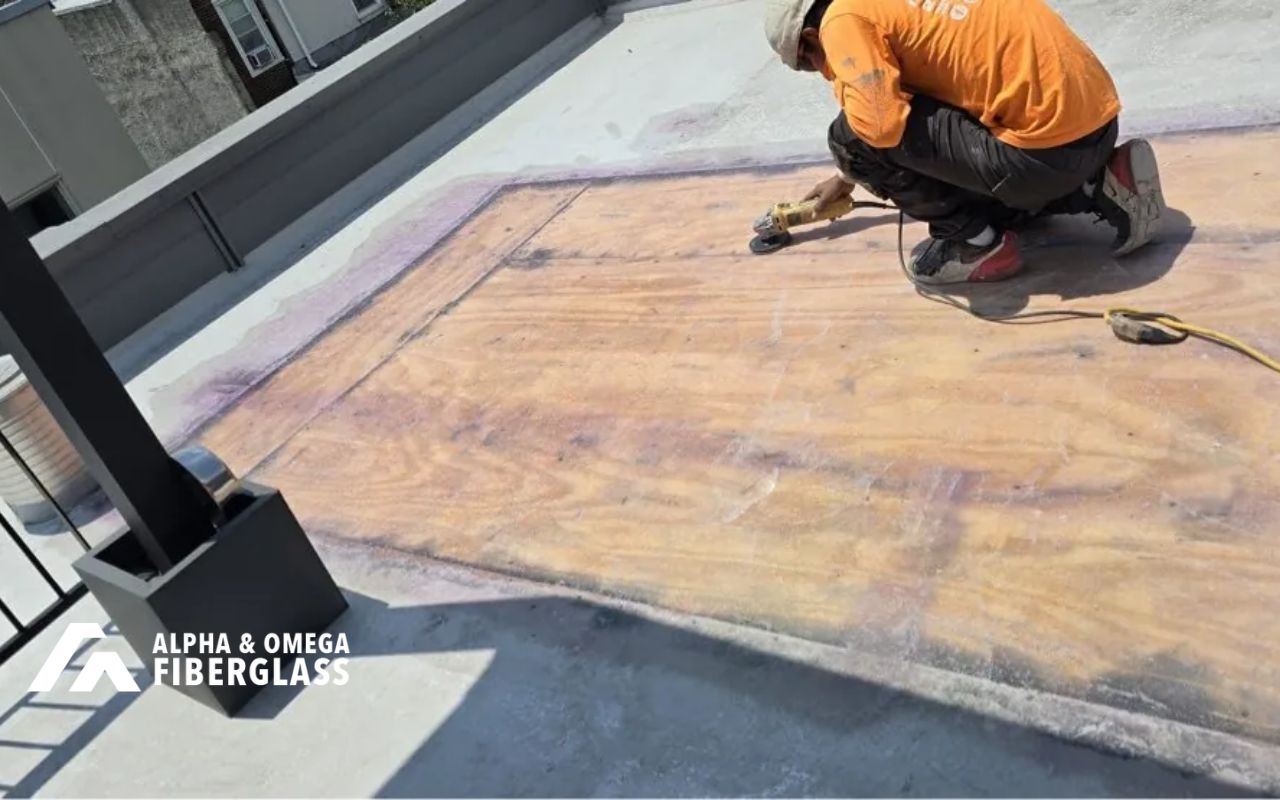
How Can Fiberglass Roof Soft Spots Be Fixed Safely?
A spongy step on a fiberglass roof can point to water hidden below the surface. At Alpha & Omega Fiberglass, we look for the cause before the weak area spreads. This guide explains what to check, what to avoid, and when a repair needs skilled hands.
How Can Fiberglass Roof Soft Spots Be Fixed Safely?
Fiberglass roof soft spots should be checked, dried, and repaired before moisture weakens the roof deck. A safe fix starts with finding the water source, removing damaged material, rebuilding the fiberglass layers, and sealing the area against future leaks.
Fiberglass roof repair involves finding weak roof areas, removing damaged fiberglass, drying affected layers, and rebuilding the surface with resin and mat. Homeowners need this service when a roof feels soft, leaks appear, or moisture damages the deck. The goal is to restore strength and stop water from spreading.
Warning Signs Reveal Hidden Fiberglass Roof Soft Spots
Soft areas usually show up through movement, staining, surface cracks, or a spongy roof deck. These warning signs matter because moisture can travel below the top layer before a leak becomes visible inside the home.
Step carefully when checking a roof. A weak area may feel firm at first, then dip under pressure. That movement can show that the fiberglass skin has separated from the layer below.
Spongy movement underfoot near drains, seams, or roof edges
Small cracks, bubbles, or loose surface coating
Dark stains near ceilings or upper walls
Musty smells after rain or heavy humidity
Standing water after storms on low-slope roof areas
Fiberglass roof soft spots can exist before water drips indoors. Because of that, early inspection helps prevent a larger repair area.
Trapped Moisture Signs Prevent Deeper Roof Deck Damage
Trapped moisture signs often include softness, bubbles, stains, and areas that stay damp longer than nearby surfaces. Moisture under fiberglass can weaken the roof deck and damage the bond between resin, mat, and substrate.
Water can enter through tiny cracks, worn sealant, clogged drainage, or old patches. Once moisture gets below the surface, sunlight and temperature changes can make the damage worse.
According to the U.S. Environmental Protection Agency, moisture control is an important part of building design, construction, and maintenance. That same idea matters on roofs, where hidden water can affect materials over time.
Softness usually points to hidden weakness, not only surface wear.
Bubbling can show that trapped vapor is pushing upward.
Repeated dampness can damage nearby roof sections.
Roof stains can help locate the path of water movement.
When customers contact Alpha & Omega Fiberglass, we ask where the soft area appears, when it was noticed, and whether leaks have shown inside.
Careful Inspection Protects Your Roof From Costly Repairs
A careful inspection helps separate a small surface issue from a deeper structural concern. The right check looks at roof feel, drainage, cracks, seams, patches, and nearby leak paths before repair materials are chosen.
A visual check is not always enough. Some damage sits below the fiberglass layer. For safety, avoid pressing hard on weak areas or walking across a spongy roof deck without support.
The National Roofing Contractors Association publishes roofing guidelines and technical resources for roof systems, materials, and installation practices. Roof problems are easier to manage when inspection and repair choices follow accepted roofing knowledge.
Helpful inspection points include:
Look around drains, gutters, vents, skylights, and corners.
Check whether water collects in the same spot after rain.
Review old repair patches for cracks or lifted edges.
Watch for surface movement near seams.
Use Roof Inspection Guide to understand common inspection points.
With Alpha & Omega Fiberglass, you get clear guidance before repair work begins, so the next step matches the roof condition.
Smart Repair Choices Guide Safe Long Term Results
The best repair choice depends on the size, depth, and moisture level of the soft spot. Small surface damage may need patching, while wet or loose layers may need removal, drying, rebuilding, and sealing.
A repair should not trap water under new resin. If wet material stays covered, the patch can fail and the soft area can return. That is why drying and preparation matter.
Common repair choices include:
Clean and seal minor surface cracks before water enters.
Remove loose resin and damaged fiberglass mat.
Dry the area fully before new material is applied.
Rebuild the section with proper fiberglass layers.
Blend and seal the repair against UV exposure and rain.
For detailed repair context, review Repair Service Options before deciding whether to handle the issue alone.
Proper Preparation Builds Stronger Fiberglass Repair Patches
Preparation decides whether a fiberglass patch bonds well or fails early. The surface must be clean, dry, sanded, and free of loose material before resin and mat are applied to the damaged section.
Dust, dampness, and old loose coating can stop new resin from holding. A rushed patch may look finished, yet still allow water to return below the repair.
Important preparation steps include:
Clear debris from the repair zone.
Clean the surface with mild detergent and water.
Let the area dry completely.
Remove loose or weak fiberglass material.
Sand edges so the new layer can bond.
Protect surrounding areas from resin spills.
During a visit with Alpha & Omega Fiberglass, we review the soft area, explain what we see, and discuss whether patching or deeper repair is safer.
Our Repair Process Restores Firm Roof Surface Support
A clear repair process helps customers understand what happens after booking. We first gather details, inspect the weak area, check moisture concerns, explain repair options, prepare the surface, complete the repair, and review the finished area.
When you contact us, we first ask about the location of the soft spot, recent leaks, roof age, and any past patch work. Then we explain what information helps us prepare.
Step one: We review the roof concern and related leak history.
Step two: We inspect the affected area and nearby entry points.
Step three: We explain safe repair options before work begins.
Step four: We remove weak material and prepare the surface.
Step five: We rebuild and seal the repaired section.
A fiberglass roof repair contractor should explain the cause, not only cover the soft spot. That approach helps reduce repeat damage.
For leak-related concerns, visit Leak Detection Steps to learn how water paths are reviewed.
Regular Maintenance Extends Fiberglass Roof Service Life
Regular maintenance keeps small roof problems from becoming major damage. Cleaning drains, removing debris, checking patches, and watching for trapped moisture signs can help protect the fiberglass surface and roof deck.
Inspect the roof after storms, strong wind, heavy foot traffic, or long wet periods. Low areas, corners, and roof penetrations need extra attention because water often collects there.
Useful maintenance habits include:
Clear leaves and debris from drainage paths.
Check sealant near vents, edges, and seams.
Look for bubbles, cracks, and soft movement.
Limit roof traffic when possible.
Schedule help before the damage spreads.
If you notice new leaks after rain, compare your roof symptoms with Common Leak Causes.
Frequently Asked Questions
How do I know if my fiberglass roof has soft spots?
You may notice a spongy roof deck, slight dipping underfoot, bubbles, cracks, or stains inside the home. Avoid walking heavily on the area and review Roof Inspection Guide for safer inspection points.
When should I call a fiberglass roof repair contractor?
Call a fiberglass roof repair contractor when the area feels soft, spreads after rain, shows bubbles, or appears near a leak. A contractor can check whether the damage is only on the surface or deeper in the deck.
What happens if fiberglass roof soft spots are ignored?
Ignored fiberglass roof soft spots can grow as water weakens the layers below the surface. Over time, the roof may leak, the deck may soften more, and the repair area may become larger.
Why is trapped moisture dangerous under fiberglass roofing?
Trapped moisture can weaken the bond between fiberglass layers and the roof deck. It can also support mold growth indoors if water reaches building materials. Learn more through Leak Detection Steps.
Can a small fiberglass roof patch stop soft spots?
A patch can help only when the damaged area is dry, clean, and shallow. If moisture remains under the surface, patching over it may hide the problem instead of solving it. See Patch Procedure Guide.
Connect With Skilled Help Before Damage Spreads
Fiberglass roof soft spots deserve quick attention because hidden moisture can grow beyond the first weak area. Contact Alpha & Omega Fiberglass when you need clear answers, safe inspection, or repair guidance through our Contact Our Team page.
