





What Are Fiberglass Roof Expansion Joint Details For?
Fiberglass roofs need room to move as heat, cold, wind, and building shifts affect the surface. Therefore, fiberglass roof expansion joint details help protect the roof from cracks, leaks, and early damage. At Alpha & Omega Fiberglass, we focus on clear planning, strong sealing, and simple care that helps every fiberglass roof last longer.
What Are Fiberglass Roof Expansion Joint Details For?
Fiberglass roof expansion joint details show how a roof handles safe movement. In simple terms, these joints create a planned flexible space between roof areas. As temperatures change, the roof can expand and contract without tearing.
Because every roof moves, these details matter before damage starts. Alpha & Omega Fiberglass uses them to help control stress, protect seams, and support long-term waterproofing. As a result, property owners can avoid many leaks and roof surface failures.
Protect Your Roof By Managing Seasonal Movement Correctly
Every roof faces heat during the day and cooler air at night. Therefore, thermal expansion roofing can push and pull the surface many times. Without the right joint plan, this movement can create cracks or open seams.
Fiberglass roof expansion joint details help guide this movement safely. Instead of letting pressure spread across the roof, the joint absorbs it in one planned area. Consequently, the surface stays stronger and more stable.
They reduce stress between roof sections.
They help stop cracks near seams.
They support a more watertight roof system.
They help older buildings handle movement better.
Alpha & Omega Fiberglass knows that strong roof planning starts with movement control. Therefore, we look at edges, seams, drainage, and surface condition together. For a complete roof overview, visit our fiberglass roof solutions.
Prevent Costly Roof Leaks Through Better Joint Planning
Leaks often begin where roof parts meet or shift. However, roof movement joints help reduce that risk. These joints allow controlled movement while keeping the roof sealed against rain.
Because water finds weak spots fast, joint placement must be planned with care. The joint must sit where the building naturally moves. Also, the sealant must stay flexible after it cures.
At Alpha & Omega Fiberglass, we treat every joint as part of the full roof system. Therefore, we check nearby flashing, edges, and drainage areas too. When repair is already needed, our roof repair support can help restore protection.
Fiberglass roof expansion joint details are not only about the joint itself. Instead, they also include the surrounding surface, the bond, and the finish. As a result, good planning can reduce emergency calls and repair stress.
Choose The Right Joint Type For Long Performance
Different roofs need different joint designs. Therefore, the right choice depends on the building, roof size, movement range, and water exposure. A small roof may need a simple sealed joint. However, a larger roof may need a stronger covered system.
Common joint options include:
Open joints for simple movement and drainage.
Covered joints for cleaner appearance and added protection.
Sliding joints for wider movement areas.
Tongue-style joints for stronger water control.
Each choice has a clear purpose. For example, covered joints help block debris from entering the gap. Meanwhile, sliding styles can help when roof movement is wider.
Alpha & Omega Fiberglass reviews fiberglass roof expansion joint details before recommending a repair or installation path. Because no roof is exactly the same, we match the joint to the roof condition.
Install Each Joint Using Clear Professional Care Steps
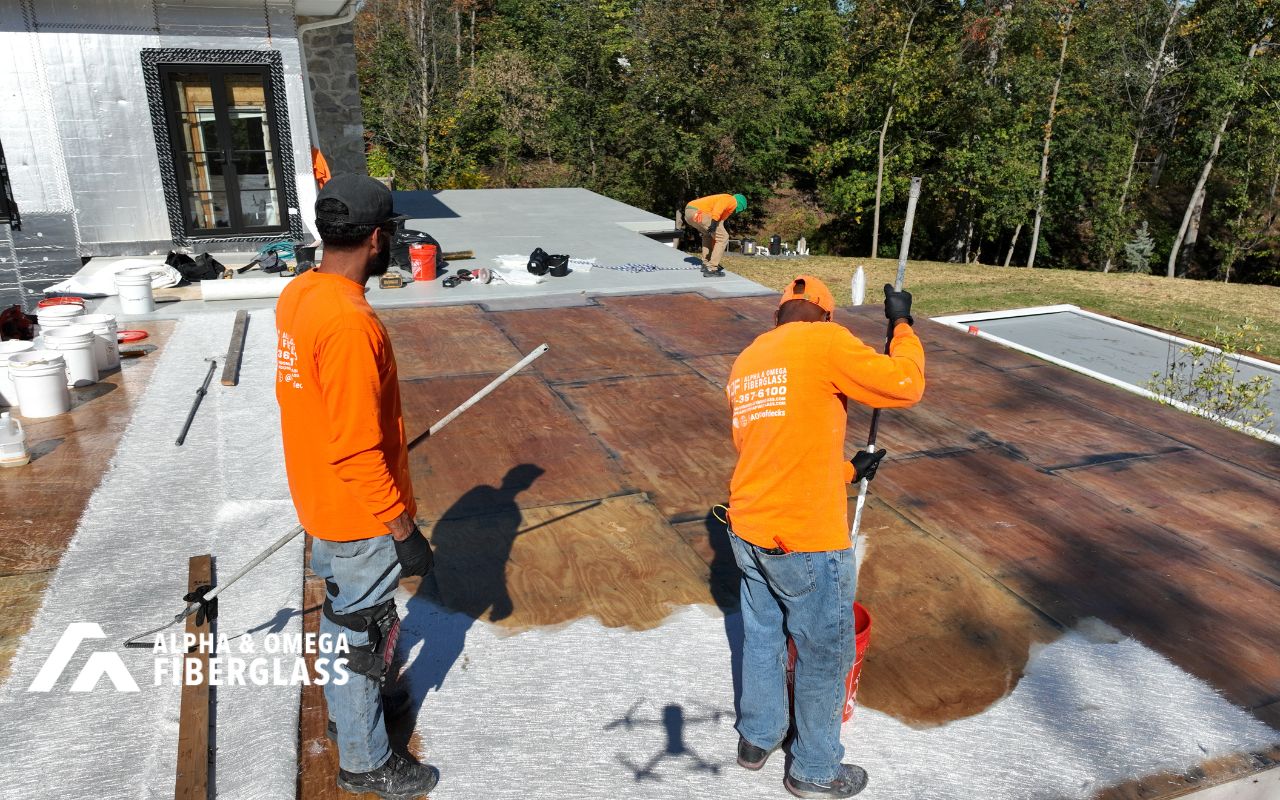
Good materials can fail when installation is poor. Therefore, the joint must be straight, sealed, and fixed in the correct position. Even a small gap can let water move under the surface.
Professional installation should include:
Cleaning the surface before bonding.
Checking the joint path for straight alignment.
Applying compatible sealant evenly.
Protecting edges against water entry.
Allowing proper curing before heavy use.
Because curing affects strength, timing and temperature matter. For more guidance, read our curing temperature guidance.
Alpha & Omega Fiberglass also checks edge work during joint planning. Strong edges help keep water from moving under the roof layer. Therefore, our edge detailing guide can help explain another key part of roof protection.
Maintain Roof Movement Areas Before Small Issues Spread
Maintenance keeps joints working after installation. Because leaves, dirt, and loose gravel can block movement, joint areas should stay clean. When debris sits inside the gap, the joint may bind or wear faster.
Simple checks can prevent larger damage. First, look for cracked sealant. Next, check for loose fasteners or lifted edges. Then, watch for stains or soft spots near the joint.
At Alpha & Omega Fiberglass, we recommend checking roof movement joints at least twice a year. Also, check them after heavy storms or strong wind. This habit can help prevent the need for a larger fiberglass roof repair service.
For customers in nearby service areas, our team also supports local fiberglass roofing needs. Therefore, Phoenixville property owners can review our Phoenixville roofing service.
Resolve Common Joint Problems Before Bigger Repairs Grow
Joint problems often start small. However, they can spread quickly when water enters the roof system. Therefore, quick action matters.
Common warning signs include cracked sealant, open gaps, water stains, and surface lifting. Also, binding can happen when debris blocks the joint channel. When this occurs, the roof cannot move as planned.
Usually, the solution starts with cleaning the area. Then, damaged sealant is removed and replaced. If the fiberglass part is broken, that section may need targeted repair.
Alpha & Omega Fiberglass can inspect the joint and nearby roof surface. As a result, we can decide whether the issue needs sealing, patching, or a fuller fiberglass roof repair service. For broader help, explore our fiberglass services.
Follow Simple Steps To Review Your Roof Safely
A safe roof review helps you spot early problems. However, never walk on a roof that feels unsafe. Instead, check from a secure place when possible.
Look for standing water near joints.
Check for dirt inside movement gaps.
Look for cracked or hard sealant.
Notice any lifted roof edges.
Call a professional when damage appears.
Because fiberglass roof expansion joint details can be hard to judge from the ground, professional review is often best. Alpha & Omega Fiberglass can help inspect the roof and explain next steps clearly.
Also, this review can support better planning before a storm season. Therefore, contact our team through the contact page when you need clear answers.
Extend Roof Life With Smart Inspection Habits Today
Expansion joints protect the roof quietly every day. However, they need proper design, careful installation, and regular care. When these steps work together, the roof can handle heat, cold, and building movement better.
Fiberglass roof expansion joint details also help lower long-term repair risk. Because they reduce stress, they support a more stable roof surface. As a result, owners can protect their building and avoid sudden leaks.
At Alpha & Omega Fiberglass, we believe small details create stronger results. Therefore, we plan, repair, and maintain fiberglass roofs with movement in mind. When you want a roof that handles seasonal change better, our team is ready to help.
Frequently Asked Questions
Why do fiberglass roofs need expansion joints?
Fiberglass roofs need expansion joints because heat and cold make materials move. Therefore, the joints help prevent cracks, open seams, and leaks. For full roof protection options, visit our fiberglass roof solutions.
How often should roof movement joints be inspected?
Roof movement joints should be checked at least twice a year. Also, they should be reviewed after strong storms. If damage appears, our roof repair support can help.
Can poor curing affect expansion joint performance?
Yes, poor curing can weaken the seal and reduce roof protection. Therefore, temperature and timing matter during installation. Learn more through our curing temperature guidance.
Do roof edges affect expansion joint waterproofing?
Yes, roof edges can affect how water moves around joints. Because weak edges may allow leaks, edge work must be planned carefully. Our edge detailing guide explains more.
When should I call a fiberglass roof repair service?
Call a fiberglass roof repair service when you see cracks, stains, loose edges, or repeated leaks. Quick action can stop damage from spreading. To schedule help, use our contact page.
