





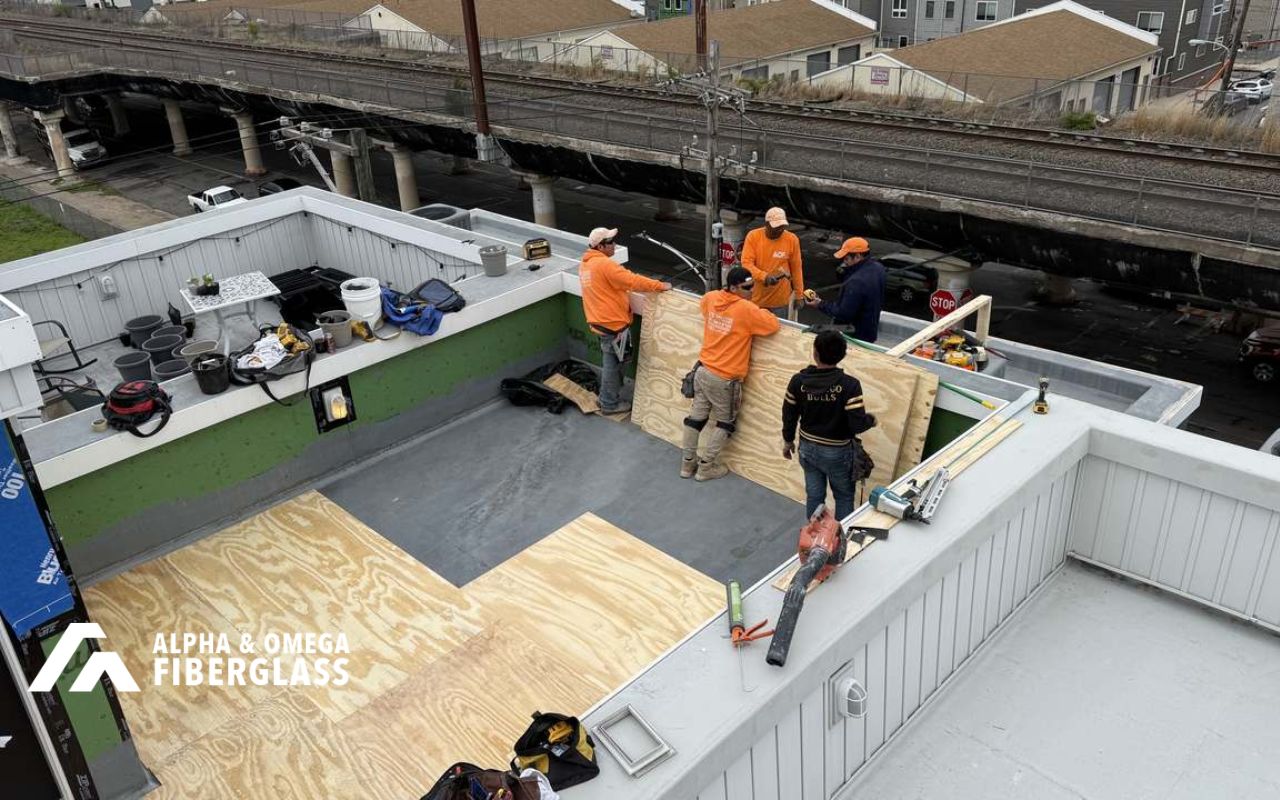
How Does Deck Waterproofing Drainage Slope Protect Outdoor Spaces?
Water problems often start with a small low spot on the deck. When rain cannot move away, puddles can stain surfaces, weaken seams, and create slippery areas. At Alpha & Omega Fiberglass, we look at slope, drains, membranes, and edges together so your outdoor space can handle weather with less stress.
How Does Deck Waterproofing Drainage Slope Protect Outdoor Spaces?
Deck waterproofing drainage slope protects outdoor spaces by moving rainwater toward safe drainage points. The right slope helps reduce puddles, surface wear, leaks, and slippery areas, while supporting the waterproofing system below the finished deck surface.
For many property owners, this service includes checking the deck pitch, waterproof surface, seams, edges, and drain paths. It helps homeowners, building owners, and contractors solve standing water problems before moisture reaches framing, rooms below, or finished outdoor areas.
Deck Waterproofing Drainage Slope Prevents Costly Water Problems
A correct deck waterproofing drainage slope gives water a clear path off the surface. This helps prevent ponding, soft spots, stained areas, and damage near seams. Even a small slope can make the waterproofing system work better during heavy rain.
Water should never sit on a deck for long periods. Standing water can weaken coatings, collect dirt, and increase slip risks. It can also push moisture toward corners, rail posts, and wall connections.
Standing water can point to a low area or blocked drain path.
Dark stains near seams may show that water is sitting too long.
Soft deck areas can signal moisture problems below the surface.
Slippery spots can create safety concerns after rain.
According to InspectAPedia, rooftop deck construction must avoid leaks and safety hazards by using the right waterproofing and drainage details. That same water-control idea matters for decks, balconies, and roof deck surfaces.
With Alpha & Omega Fiberglass, you get a practical review of the surface, slope direction, and drainage points before work begins. For more details, visit our fiberglass deck waterproofing guide.
Balcony Slope Basics Guide Safer Everyday Water Runoff
Balcony slope basics help explain why water must move away from doors, walls, and deck edges. A balcony often sits above living space, so poor slope can create higher leak risks. The right pitch helps keep runoff controlled and predictable.
Balconies, decks, and roof decks all need water movement. However, each surface may need a different drain layout. A balcony may use edge flashing, scuppers, or drains to keep water from moving into the building.
Balcony slope should feel comfortable underfoot while still moving water. A common target is about 1/8 to 1/4 inch per foot, depending on the surface and project needs. Local code and site conditions should always guide the final decision.
Before repairs begin, the safest next step is finding where water collects. Low spots, blocked edges, and poor flashing details should be checked together.
Roof Deck Drainage Supports Stronger Waterproofing Performance Outdoors
Roof deck drainage matters because these decks often protect rooms or structures below. Water must reach drains, gutters, or scuppers before it can sit on the membrane. Clear drainage helps reduce leaks, coating stress, and long-term moisture damage.
A roof deck needs more than a waterproof surface. It also needs the right slope, clean outlets, sealed penetrations, and strong edge details. Building Science Corporation notes that balcony and deck waterproofing details should guide water outward through planned drainage layers.
Scuppers move water through wall or edge openings.
Linear drains collect runoff along a long deck edge.
Primary drains move water from low points on roof decks.
Overflow paths help when heavy rain exceeds normal flow.
Roof deck drainage should never depend on luck. Water needs a visible, open, and maintained route away from the finished surface.
For related details, review our fiberglass roof drain detailing resource.
Smart Design Reduces Long-Term Moisture Repair Risks
Good drainage design reduces repair risks by matching slope, surface type, drain placement, and waterproofing materials. When these parts work together, water leaves the deck faster. This helps protect seams, edges, framing, and finished spaces below.
Deck material affects how drainage should be planned. Wood, composite, tile, and fiberglass systems all respond to water differently. Some surfaces allow small gaps, while others need a sealed and sloped waterproof layer.
Choose slope direction before surface installation starts.
Keep water away from walls whenever the layout allows.
Protect seams and transitions with the correct waterproofing detail.
Match drains to rainfall needs and deck size.
A flat deck can hold water even when the surface looks finished. A planned slope helps water move before it reaches weak points.
When customers contact Alpha & Omega Fiberglass, we first ask about the deck type, visible puddles, leaks, and drainage path. Those details help us understand the problem before an on-site review.
Simple Measurements Create Consistent Water Movement Across Decks
Simple measurements help confirm whether a deck has enough drop for water movement. The basic idea is to compare the deck run with the needed fall. This helps show whether water should reach drains, scuppers, or edges without ponding.
A common slope range is 1/8 to 1/4 inch per foot. For example, a 12-foot run may need about 1.5 to 3 inches of total drop. The best target depends on the surface, drainage point, and structure.
Deck waterproofing drainage slope should be measured in several places. One low corner can still hold water even if the main deck area looks correct.
Our crew at Alpha & Omega Fiberglass can check slope with practical tools and surface observations. Then we explain what may need correction before the waterproofing layer is installed or repaired.
Fiberglass Deck Waterproofing Contractor Guidance Improves Project Decisions
A fiberglass deck waterproofing contractor can help owners avoid hidden slope and drainage mistakes. The right evaluation looks at water paths, membrane condition, seams, edges, and signs of moisture. This guidance helps owners make safer repair or installation decisions.
Some drainage problems are easy to see after rain. Other issues stay hidden until water reaches framing or rooms below. That is why a project review should include both the surface and the drainage details.
A contractor should explain the work in clear language. You should understand the slope goal, surface preparation, waterproofing method, and expected water path before the project starts.
To compare past work and finish styles, visit our our work page. You can also learn how projects move forward on our our process page.
Clear Process Explains What Happens Before Work Begins
Our process starts with understanding the deck problem before recommending a solution. We ask about puddles, leaks, deck use, surface age, and recent repairs. Then we review slope, drainage, and waterproofing needs so the next step feels clear.
When you reach out, we may ask for photos, deck size, surface type, and where water collects. These details help us prepare for a better conversation.
First contact: you share the deck concern and location details.
Initial review: we look at visible drainage and surface issues.
Site evaluation: slope, seams, edges, and outlets are checked.
Clear explanation: we explain repair or waterproofing options.
Next steps: you decide how to move forward with confidence.
After the visit with Alpha & Omega Fiberglass, customers know what was found and why it matters. That clarity helps prevent rushed decisions and surprise repairs.
Frequently Asked Questions
How do I know if my deck has poor drainage slope?
You may notice puddles, stains, slippery areas, or water sitting near walls after rain. These signs can mean the surface does not move water correctly. Our fiberglass deck waterproofing page explains related surface concerns.
When should I call about standing water on my deck?
You should call when water stays on the deck after normal drying time. Early checks can help prevent seam damage, leaks, and surface wear. Use our contact page to share your concern.
What happens if roof deck drainage is blocked?
Blocked roof deck drainage can cause ponding, overflow, coating stress, and leak risks. Leaves, dirt, and debris should be removed before water backs up. You can learn more through our fiberglass roof drain detailing article.
Why is fiberglass useful for deck waterproofing projects?
Fiberglass can create a sealed surface that helps protect the structure below. It works best when slope, seams, edges, and drains are planned together. Our fiberglass deck waterproofing contractor guide shares more project insight.
How much slope does a waterproof deck usually need?
Many waterproof decks use about 1/8 to 1/4 inch per foot, depending on design and drainage points. The goal is steady runoff without an uncomfortable walking surface. A project review can confirm the best slope for your deck.
Careful Planning Extends Deck Life And Customer Confidence
Careful planning helps your deck drain better, stay safer, and support the waterproofing system longer. If water is collecting on your deck, the best step is a clear review of slope, drains, and surface condition. Start by visiting our contact page.
