





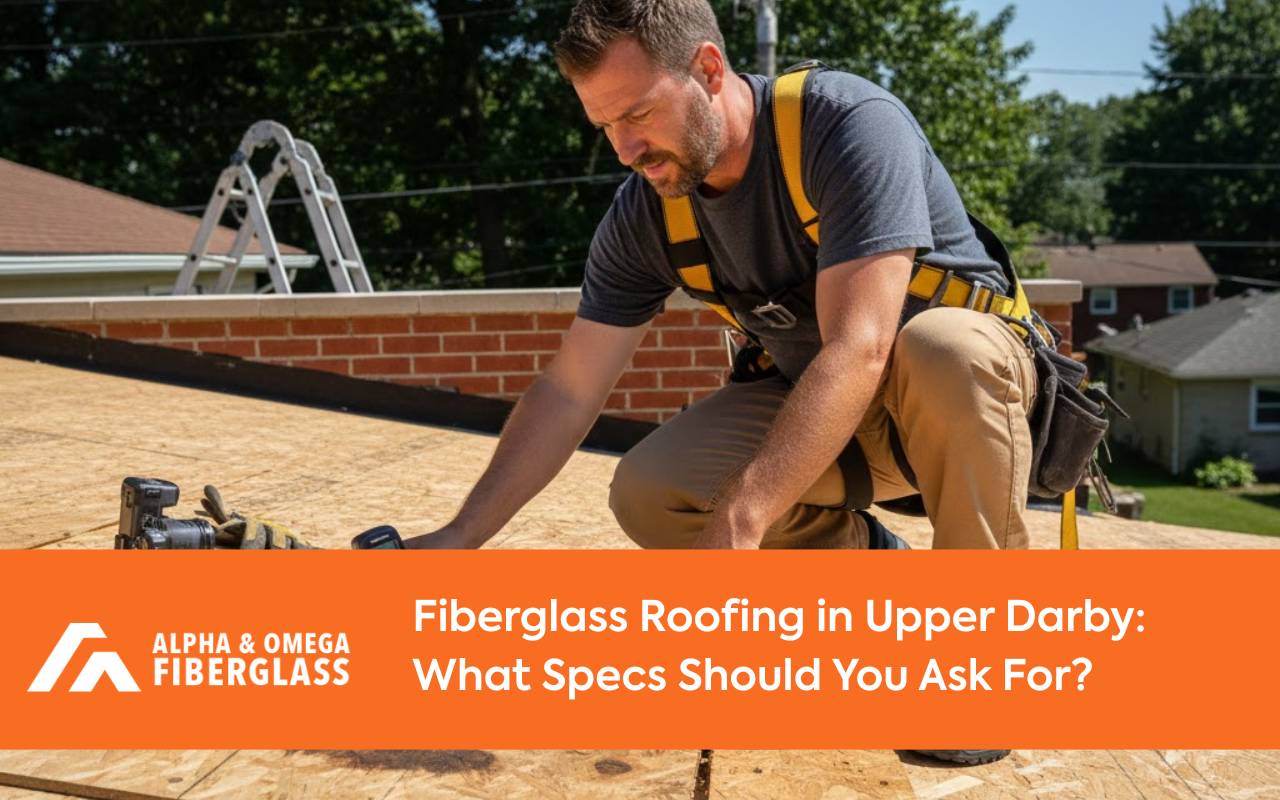
Fiberglass Roofing in Upper Darby: What Specs Should You Ask For?
When you start planning fiberglass roofing in Upper Darby, the specifications list can feel confusing and long. Terms like substrate compatibility or topcoat selection may sound very technical at first. However, once you break them down, the choices become much easier to compare.
This guide explains the key specs you should request and why they matter. You will see how overlay versus tear-off, UV and fire ratings, insulation, ventilation, and warranty details all work together. By the end, you can discuss your project with confidence and choose solutions that match your home and budget.
Understanding Fiberglass Roofing Substrates
Because climate swings are intense, fiberglass roofing in Upper Darby must start with a stable, compatible substrate. The roof deck acts as the foundation for the entire system. If this layer is weak or damaged, even the best fiberglass materials will not perform well over time.
Common substrates include plywood, OSB, concrete, metal panels, and even existing shingles. Each one has unique pros and cons. Wood can swell when damp, while metal moves as temperatures change. Therefore, your contractor should examine the deck for soft spots, rust, or loose sections before any new work begins.
Checking substrate compatibility step by step
Inspect the deck for rot, rust, and loose fasteners.
Use a moisture meter to find hidden damp areas.
Level bumps and fill gaps to create a smooth surface.
Clean away dirt, dust, and old coatings.
Apply primers and sealers suited to wood, concrete, or metal.
A well prepared deck helps fiberglass mats lay flat and bond correctly. After cleaning, primers seal tiny pores and pinholes in the surface. That way, the new system can tie into your existing structure. To compare deck options and build details, you can review broader fiberglass roof options that match your home.
Evaluating Topcoat Options for Fiberglass Roofing
The final coating you choose can make fiberglass roofing in Upper Darby last longer and look better. Topcoat selection affects weather resistance, energy use, and overall style. Popular systems include acrylic, silicone, and polyurethane coatings, each offering different strengths for local conditions.
Acrylic coatings are usually cost friendly and available in many colors. Silicone products add strong water and UV resistance, ideal for sunny summer days. Polyurethane options often handle foot traffic and windblown debris very well. As you compare, ask how each topcoat will behave on your exact roof shape and slope.
Key factors when choosing a topcoat
Coating type and flexibility over time.
Reflectivity and color to control heat gain.
Recommended thickness in mils for your climate.
Compatibility with your primers and resins.
Maintenance needs and cleaning methods.
Light-colored, reflective topcoats can lower attic temperatures by bouncing sunlight away. Thicker layers may provide extra impact resistance, though they usually require more drying time. When discussing specs, connect your topcoat choice to your energy goals and appearance preferences so both work together.
Comparing Overlay and Tear-Off Methods
Your choice between overlay and tear-off methods shapes how fiberglass roofing in Upper Darby performs over time. With an overlay, installers place new materials over the existing roof. This approach can reduce labor, cut disposal needs, and shorten the project timeline.
However, overlays may hide damaged decking or trapped moisture. Extra layers also add weight that some structures cannot handle safely. A full tear-off removes old roofing down to the deck, which lets your contractor repair problems before they grow. Although it involves more work, a tear-off often gives the most reliable long term base.
Overlay versus tear-off at a glance
Overlay: less disruption, but higher risk of hidden issues.
Tear-off: higher upfront effort, but better deck visibility.
Overlay fits newer, sound roofs with limited wear.
Tear-off suits older systems with leaks or sagging areas.
As you compare options, ask your contractor to show photos or reports from similar projects. For example, local fiberglass roofing in Upper Darby, PA projects can reveal how each method performs on homes like yours.
Why UV Resistance Matters in Fiberglass Roofs
Strong sunlight slowly weakens many roofing materials. UV rays can fade colors, cause surface cracking, and reduce overall strength. Therefore, choosing a fiberglass system with built in UV resistance is essential for long term reliability and appearance.
Fiberglass mats made with UV inhibitors and compatible resins handle sun exposure better. Some topcoats also include reflective pigments or special filters. These features help protect the layers below, keep your roof cooler, and preserve the finish for more years. Always ask for product data that explains the level of UV protection in clear terms.
How Fire Resistance Ratings Protect Your Home
Fire ratings describe how well a roof system resists flame spread and heat. Many fiberglass systems earn Class A or Class B ratings, which are among the highest for homes. A Class A roof is tested for severe fire exposure and offers strong protection for your family and property.
Fire ratings may also affect local code approval and insurance costs. When reviewing materials, ask for documentation that shows the rating and test standards. By choosing a high-rated system, you can increase safety while also supporting possible insurance savings. This is a smart spec to confirm before signing your contract.
Considering Warranty Details for Long-Term Peace of Mind
Even with quality materials, you still need clear warranty coverage. A good warranty can protect you from defects in products or workmanship. Yet, not all warranties are the same. Some only cover cracking or peeling, while others also include leaks or color fade.
Check whether the warranty is prorated or non-prorated. A non-prorated warranty keeps full coverage for the entire term, while prorated coverage shrinks over time. Also ask about maintenance rules, required inspections, and who must perform repairs. When questions arise, a trusted partner for fiberglass roof repair can help you keep your coverage valid.
Assessing Insulation Requirements for Fiberglass Roofing
Fiberglass roofing itself does not provide much insulation, so you need a plan for layers below the deck. Proper insulation keeps heat inside during winter and outside during summer. It also supports stable indoor comfort and helps lower monthly energy costs.
Common choices include rigid foam boards, polyiso panels, and spray foam. Each offers different R-values and installation methods. In a climate with hot summers and cold winters, you should aim to meet or exceed local code requirements. Talk with your contractor about the best thickness and layout for your attic or roof structure.
Ensuring Proper Ventilation in Fiberglass Roofing Systems
Ventilation works together with insulation to protect your home and roof. Good airflow reduces moisture buildup, which helps prevent mold, rot, and early material failure. Without proper venting, even a well insulated roof can suffer from trapped humidity and heat.
Most systems use a mix of soffit vents at the eaves and ridge vents near the peak. This setup lets cool air enter low and warm air exit high. In some cases, turbine or powered vents may assist. Your contractor should design ventilation according to roof size, pitch, and local code, not guesswork.
Budgeting for Fiberglass Roofing Installation
Careful planning keeps fiberglass roofing in Upper Darby within budget while still meeting performance goals. Costs depend on roof size, slope, number of penetrations, and material grade. Features like skylights, chimneys, or complex shapes generally add labor and complexity.
When you request quotes, ask for a clear breakdown of materials, labor, disposal, and any expected deck repairs. It is also wise to include a small cushion for surprises such as hidden rot. For larger projects or staged upgrades, discuss phased plans. If you need follow-up support, reliable fiberglass roof repair services can extend the life of your investment.
Frequently Asked Questions
What is the best substrate for a fiberglass roof?
The best substrate is one that is dry, solid, and smooth. Plywood, OSB, and concrete can all work when properly repaired and primed. Your contractor should match the deck type to local code and the fiberglass system you choose, then fix damage before laminating any new layers.
Is an overlay roof safe for my home?
An overlay can be safe when the existing roof and deck are in good shape and weight limits are respected. However, if there are leaks, sagging areas, or trapped moisture, a full tear-off is usually safer. A thorough inspection helps you decide which path fits your roof.
How do I choose the right topcoat?
Start with your main goals. If you want cooler attic temperatures, a reflective acrylic or silicone may work well. If you expect foot traffic, a tougher polyurethane might be better. Ask for product data sheets and color samples, then compare them with your climate and budget.
Why does my roof need both insulation and ventilation?
Insulation slows heat transfer, while ventilation manages moisture and excess heat. Together, they help keep indoor spaces comfortable and protect roof materials. Without enough airflow, warm, damp air can collect in attics, reducing insulation performance and creating conditions for mold or wood damage.
How can I get help planning my fiberglass roof?
If you feel unsure about specs or methods, talk with a local specialist. You can contact our fiberglass roofing team in Upper Darby to review substrates, coatings, ventilation, and warranty details tailored to your home.
Making Informed Decisions for Your Fiberglass Roofing Project
Smart planning means looking beyond price to key specs such as substrate compatibility, topcoat performance, fire rating, and UV resistance. Insulation and ventilation choices, along with clear warranty terms, also have a big impact on comfort and durability.
By asking detailed questions about overlay versus tear-off methods and long term maintenance, you can protect both your home and your budget. For related exterior upgrades that manage wind and water at entry points, consider pairing your project with professional entry and storm door installation to round out your home’s protection.
