





Which roofing choice gives better long-term building protection?
Choosing the right roof system affects leaks, upkeep, and long-term value. At Alpha & Omega Fiberglass, we help owners compare real performance, not hype. This guide explains fiberglass roof vs liquid applied systems in simple terms, so you can choose with more confidence.
Which roofing choice gives better long-term building protection?
In many cases, fiberglass roof vs liquid applied systems comes down to priorities. Some owners want a harder surface with long life. Others want easier coverage over tricky shapes. At Alpha & Omega Fiberglass, we look at structure, weather, traffic, and maintenance before we recommend a path.
Fiberglass roofing delivers strong defense for demanding roofs
Fiberglass roof systems are known for strength and stability. Therefore, they often work well on roofs that need lasting protection. At Alpha & Omega Fiberglass, we often recommend fiberglass when owners want a durable surface that handles regular use well.
It forms a tough surface that resists daily wear.
It can handle foot traffic better than many softer systems.
It supports long-term performance with proper installation.
When people compare fiberglass roof vs liquid applied systems, strength is often the first factor. In many projects, fiberglass gives owners peace of mind because it feels solid and dependable. As a result, it is a smart choice for buildings that need reliable protection over time.
This is also where fiberglass vs liquid membrane becomes a practical question. If your roof faces regular use, fiberglass may offer the firmer finish you want.
To explore system details, visit Fiberglass Roof Solutions | Durable, Affordable, Reliable Roofing.
Liquid membranes create adaptable coverage on complex surfaces
Liquid systems are valued for flexibility. Because they are cured in place, they can cover unusual shapes with fewer weak points. That is why many owners choose them for roofs with penetrations, curves, or hard-to-reach areas.
They also support seamless roofing systems, which many building owners like for moisture control. Since the coating flows across the surface, it can reduce the number of exposed joints. Therefore, liquid systems may be useful when a roof has many details that need extra care.
They adapt well to complex roof layouts.
They can form a continuous waterproof layer.
They often suit flat and low-slope surfaces.
Still, fiberglass roof vs liquid applied systems is not only about flexibility. A system should match the roof deck, building use, and long-term goals. At Alpha & Omega Fiberglass, we help owners weigh those points before work begins.
Installation methods shape timing, labor, and project control
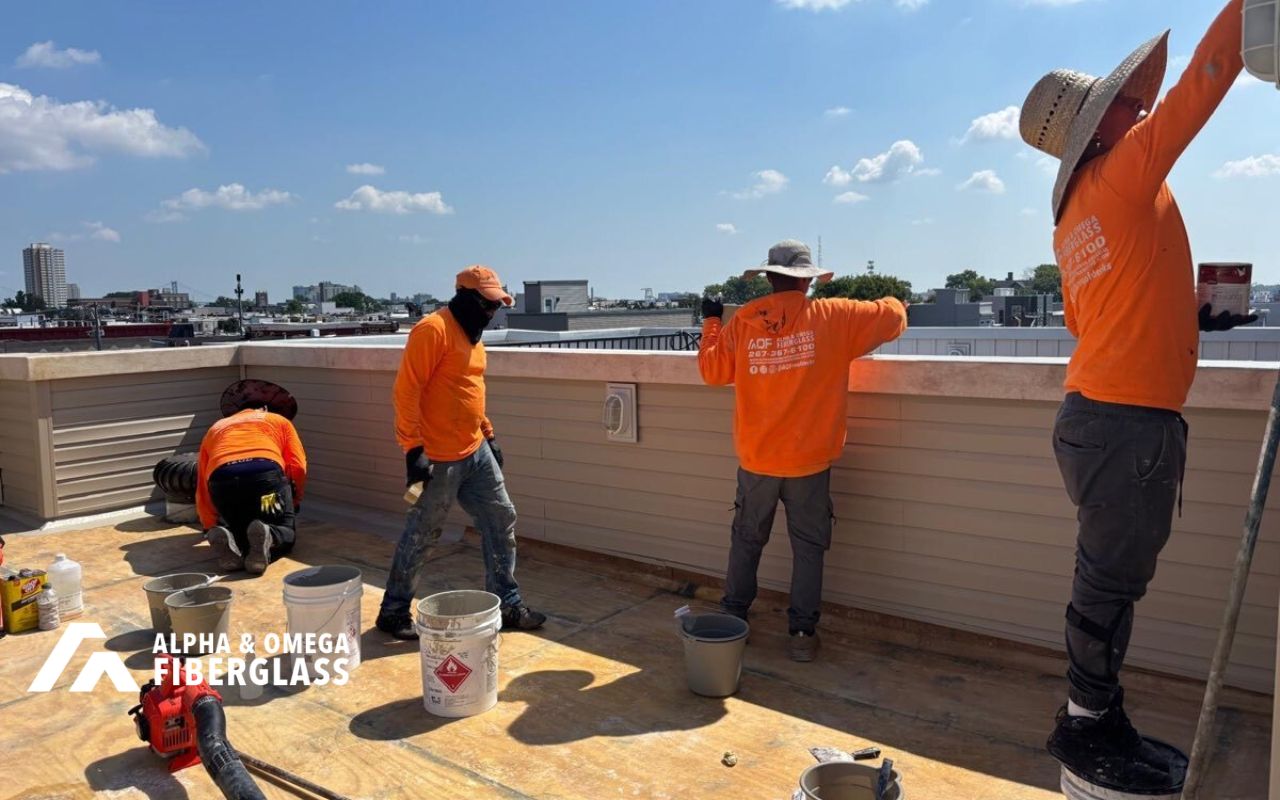
Installation matters because even a strong system can fail if the work is poor. Therefore, the skill of the crew is a major part of the decision. A trained fiberglass roofing contractor follows a careful process, and that process supports long-term results.
Fiberglass usually requires controlled steps, surface preparation, reinforcement, and curing. Liquid systems may move faster on some roofs, especially when the layout is simple. However, weather can affect timing and curing for liquid coatings.
At Alpha & Omega Fiberglass, we focus on planning, preparation, and clean execution. Moreover, our process helps reduce surprises during the job. You can review it here: Our Fiberglass Roofing Process | Alpha & Omega Fiberglass.
Long service life reduces maintenance over many years
Owners often ask which system needs less attention later. In many cases, fiberglass roof vs liquid applied systems becomes a maintenance question. Fiberglass often stands out when owners want a longer service life with fewer major interventions.
Because fiberglass has a hard outer surface, it can stay in good shape with routine inspections and simple cleaning. Liquid systems can also perform well, yet some may need recoating sooner depending on exposure and wear. Therefore, owners should compare future upkeep, not only the first install.
Schedule regular inspections after major weather events.
Clean the roof surface to remove debris and dirt.
Address small defects early before leaks spread.
At Alpha & Omega Fiberglass, we believe a roof should stay manageable over time. For coating care tips, read Fiberglass Roof Coating Guide: Stop Leaks and Protect Roofs.
Budget planning clarifies value beyond the starting cost
Cost is important, but first price alone can mislead. Fiberglass may cost more upfront in some projects. However, that higher start can make sense when owners want durability and less frequent repair work.
Liquid systems may reduce first costs, especially on roofs that benefit from quick application. Even so, future recoating, repairs, and wear should be part of the discussion. Therefore, fiberglass roof vs liquid applied systems should be measured across the full life of the roof.
At Alpha & Omega Fiberglass, we help clients compare value in a practical way. We want owners to understand what they are paying for today and what they may avoid tomorrow.
To review more service options, visit Fiberglass Services | Alpha & Omega Fiberglass Philadelphia, PA.
Our step-by-step review helps you choose with confidence
Here is a simple way to compare fiberglass roof vs liquid applied systems before you decide.
Check the roof shape and note drains, penetrations, and traffic areas.
Review the deck condition and identify any moisture concerns.
Compare the need for rigidity versus flexibility.
Estimate long-term maintenance, not only starting cost.
Choose a system that fits your building goals and climate.
If you need help with that review, Alpha & Omega Fiberglass is ready to guide you. We can discuss your project, explain the options, and recommend the best next step. Start here: Contact Us | Alpha & Omega Fiberglass Philadelphia, PA.
If you are in the area, you can also learn more from Fiberglass Roofing in Phoenixville, PA | Durable & Affordable Solutions.
Frequently Asked Questions
Which system is better for a roof with heavy foot traffic?
In many cases, fiberglass is the better fit for regular foot traffic because it provides a harder surface. For a closer comparison, read Fiberglass vs TPO: Best Flat Roof Option for Heavy Foot Traffic.
Do liquid systems work better on roofs with many details?
Yes, they often do. Because liquid coatings flow around penetrations and edges, they can suit detailed layouts well. Even so, the best option depends on the roof condition and project goals. You can also review Our Fiberglass Roofing Process | Alpha & Omega Fiberglass for planning insight.
How do I know when fiberglass is the right choice?
Fiberglass is often a strong option when you want durability, a firm finish, and lower long-term upkeep. At Alpha & Omega Fiberglass, we assess those needs before we recommend a system. Learn more at Fiberglass Roof Solutions | Durable, Affordable, Reliable Roofing.
Can seamless roofing systems help reduce leak risks?
They can help because fewer seams may mean fewer weak points. However, surface prep and installation quality still matter. For help reviewing your options, visit Fiberglass Services | Alpha & Omega Fiberglass Philadelphia, PA.
Who should I call for help comparing both options?
You should speak with an experienced team that understands roof condition, installation methods, and long-term upkeep. Alpha & Omega Fiberglass can review your project and help you compare the right path. Reach out through Contact Us | Alpha & Omega Fiberglass Philadelphia, PA.
At Alpha & Omega Fiberglass, we believe the best roofing decision is the one that fits your building, your goals, and your maintenance plan. Whether you lean toward a rigid fiberglass build or a fluid-applied option, we are here to help you make that choice with clarity.
References:
NRCA/ARMA Manual of Roof Maintenance and Repair
Tactics To Maximize Your Roof’s Lifespan - Facility Executive Magazine
