





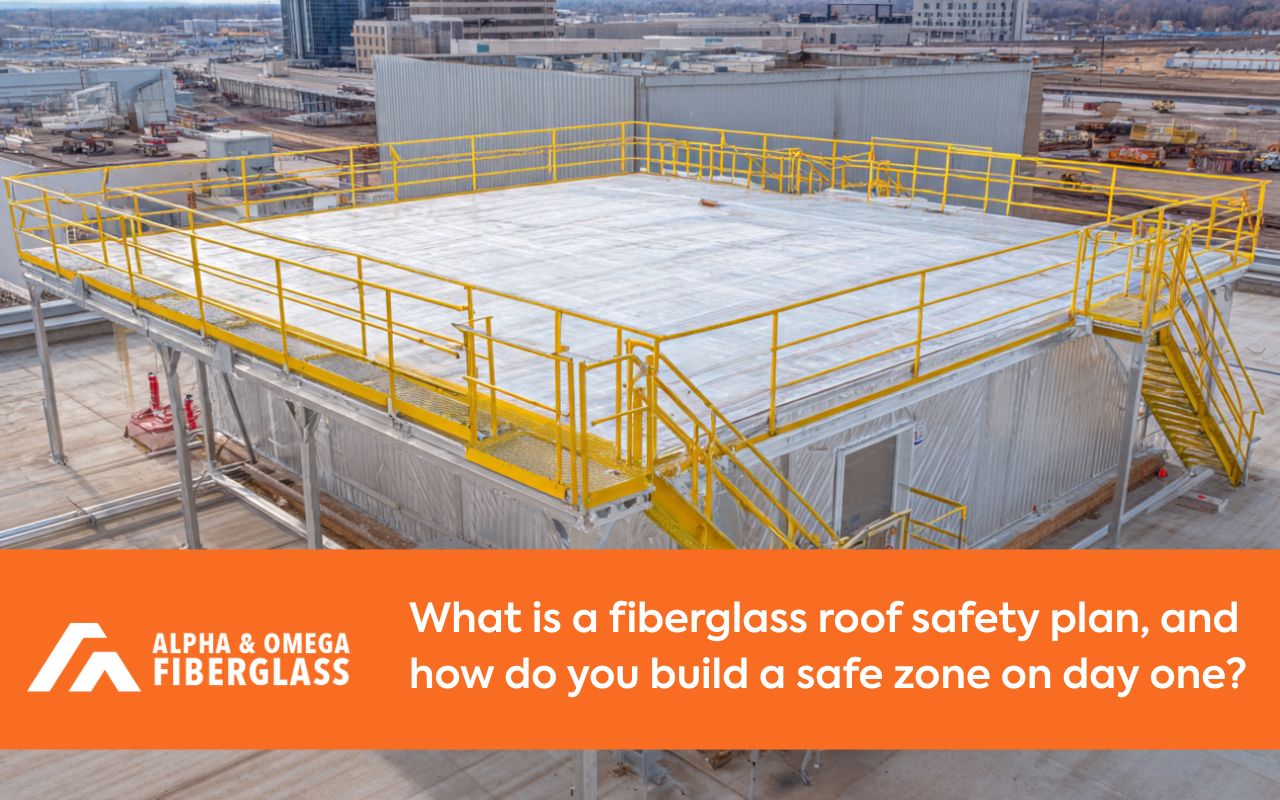
What is a fiberglass roof safety plan, and how do you build a safe zone on day one?
What is a fiberglass roof safety plan, and how do you build a safe zone on day one?
Assess roof conditions and jobsite hazards first
Install fall protection that fits the roof
Run a daily JHA before tasks begin
Use perimeter controls to protect edges and openings
Plan material handling to reduce strain and dropped items
Support ventilation and air quality during adhesive work
Train every worker on safe zone routines
Inspect safety systems and roof surfaces regularly
Prepare emergency response and evacuation procedures
How to create a fiberglass roof safety plan in 9 practical steps
How often should we update a fiberglass roof safety plan?
What fall protection works best on a fiberglass roof?
What should a daily JHA include for roof work?
How do perimeter controls reduce risk during fiberglass roofing?
What should we do if damage or leaks appear during the job?
Working on a fiberglass roof demands planning, not luck. Therefore, a clear safe zone keeps crews focused and protected. In this guide, you will build a fiberglass roof safety plan that supports consistent work. You will also reduce risk with simple routines. As a result, every step feels controlled and calm.
A fiberglass roof safety plan is a written, repeatable system that controls hazards before work starts. Therefore, it combines fall protection, a daily JHA, perimeter controls, and safe material handling. When you apply it daily, you create a predictable safe zone. As a result, crews move with confidence and fewer surprises.
Assess roof conditions and jobsite hazards first
Before you step onto the surface, inspect it with intention. Moreover, check seams, edges, and transitions for weak spots. If you find damage, mark it clearly. Then, share the findings during the kickoff talk.
Check for cracks, soft spots, and water damage.
Confirm weather, wind, and visibility conditions.
Identify slopes, skylights, and nearby power lines.
Remove debris that can cause trips or slips.
Because conditions change, repeat this check each morning. That habit strengthens your fiberglass roof safety plan from the start.
Install fall protection that fits the roof
Fall protection should match roof height, layout, and access points. Therefore, choose systems that workers can use correctly. Also, verify anchor locations before anyone ties off.
Use guardrails where work stays near edges.
Use warning lines to define controlled zones.
Use personal fall arrest systems for active work areas.
Use safety nets when conditions require a backup layer.
Additionally, inspect harnesses, lanyards, and connectors every shift. This is a core part of the fiberglass roof safety plan. It also builds trust in the system.
Run a daily JHA before tasks begin
A daily JHA keeps hazards visible and current. Therefore, gather the crew and review today’s tasks. Then, identify what can go wrong and how you will control it. As a result, everyone starts aligned.
Moreover, document changes like new equipment, new materials, or weather shifts. Then, update the fiberglass roof safety plan as needed. This routine supports continuous improvement.
Use perimeter controls to protect edges and openings
Perimeter controls prevent tools, materials, and people from drifting into danger. Therefore, define boundaries and enforce them. Also, post visible reminders where traffic is highest.
Set warning lines to define the safe zone.
Install toe boards to reduce falling objects.
Use signage near edges, ladders, and access points.
Limit roof access to trained workers only.
Consequently, the work area stays organized. This supports a stronger fiberglass roof safety plan.
Plan material handling to reduce strain and dropped items
Material handling should be deliberate, not rushed. Therefore, stage materials near the work zone. Also, choose lifting methods that protect backs and hands.
Use team lifts for heavy or awkward panels.
Use hoists or pulley systems for repeated loads.
Balance loads and keep paths clear.
Wear gloves with reliable grip and fit.
Because roof movement is risky, reduce trips across the surface. This improves material handling and supports the fiberglass roof safety plan.
Support ventilation and air quality during adhesive work
Some sealants and resins can create irritating fumes. Therefore, move fresh air through the work zone. Also, take breaks when odors build up. If needed, use approved respiratory protection. As a result, focus stays high and fatigue stays lower.
Train every worker on safe zone routines
Training turns rules into habits. Therefore, practice tying off, setting boundaries, and running the daily JHA. Also, use real roof scenarios during training. When people understand the “why,” they follow the fiberglass roof safety plan more consistently.
Inspect safety systems and roof surfaces regularly
Weekly inspections catch small issues early. Therefore, check anchors, warning lines, and damaged gear. Also, re-check roof areas after storms or heavy foot traffic. Because conditions change quickly, fast reporting prevents bigger problems.
Prepare emergency response and evacuation procedures
Emergencies require roles, not guesses. Therefore, assign who calls for help and who guides evacuation. Also, keep first-aid kits accessible and stocked. Then, run short drills so the team remembers the steps. This makes your fiberglass roof safety plan complete.
How to create a fiberglass roof safety plan in 9 practical steps
Use this sequence to build a safe zone quickly. Then, repeat it daily for consistency.
Inspect the roof and mark hazards.
Confirm access points and ladder safety.
Set perimeter controls and warning lines.
Install fall protection and verify anchors.
Stage materials for short, clear travel paths.
Run the daily JHA and assign tasks.
Confirm ventilation needs for products in use.
Start work with active spot checks.
Debrief, record issues, and improve tomorrow.
When you follow this order, your fiberglass roof safety plan becomes repeatable. Therefore, your safe zone stays stable across projects.
FAQs
How often should we update a fiberglass roof safety plan?
You should review it daily, and update it whenever conditions change. For example, weather shifts or new tasks demand changes. If you want a structured workflow, use Step-by-Step Fiberglass Roofing Process for Lasting Protection as a planning reference.
What fall protection works best on a fiberglass roof?
It depends on edges, height, and task type. However, warning lines, guardrails, and personal systems often work together. If you need help planning jobsite readiness, contact Contact Alpha & Omega Fiberglass in Philadelphia.
What should a daily JHA include for roof work?
A daily JHA should cover today’s tasks, hazards, controls, and role assignments. Moreover, it should note weather and access changes. Alpha & Omega Fiberglass encourages crews to document concerns and adjust controls quickly.
How do perimeter controls reduce risk during fiberglass roofing?
They define safe travel paths and reduce edge exposure. Additionally, they help prevent dropped tools and debris. For location-specific planning, review Discover Fiberglass Roofing in Norristown, PA Today for service context and common site needs.
What should we do if damage or leaks appear during the job?
Stop work in the affected area and reassess hazards. Then, update the daily JHA and adjust controls. For repair guidance, use Strengthen Fiberglass Roof Repair Today. If the situation is urgent, review Emergency Fiberglass Roof Repair Philadelphia Services.
Build a safer roof culture with Alpha & Omega Fiberglass
A fiberglass roof safety plan works best when it becomes routine. Therefore, keep fall protection active and keep the daily JHA consistent. Also, strengthen perimeter controls and material handling on every shift. Alpha & Omega Fiberglass supports teams that want safer, smoother projects. To plan your next job, reach out through Contact Alpha & Omega Fiberglass in Philadelphia. Alpha & Omega Fiberglass can help you align the safe zone with your scope. Additionally, Alpha & Omega Fiberglass can guide planning for complex roof conditions. As a result, Alpha & Omega Fiberglass helps crews work with clarity and control.
