





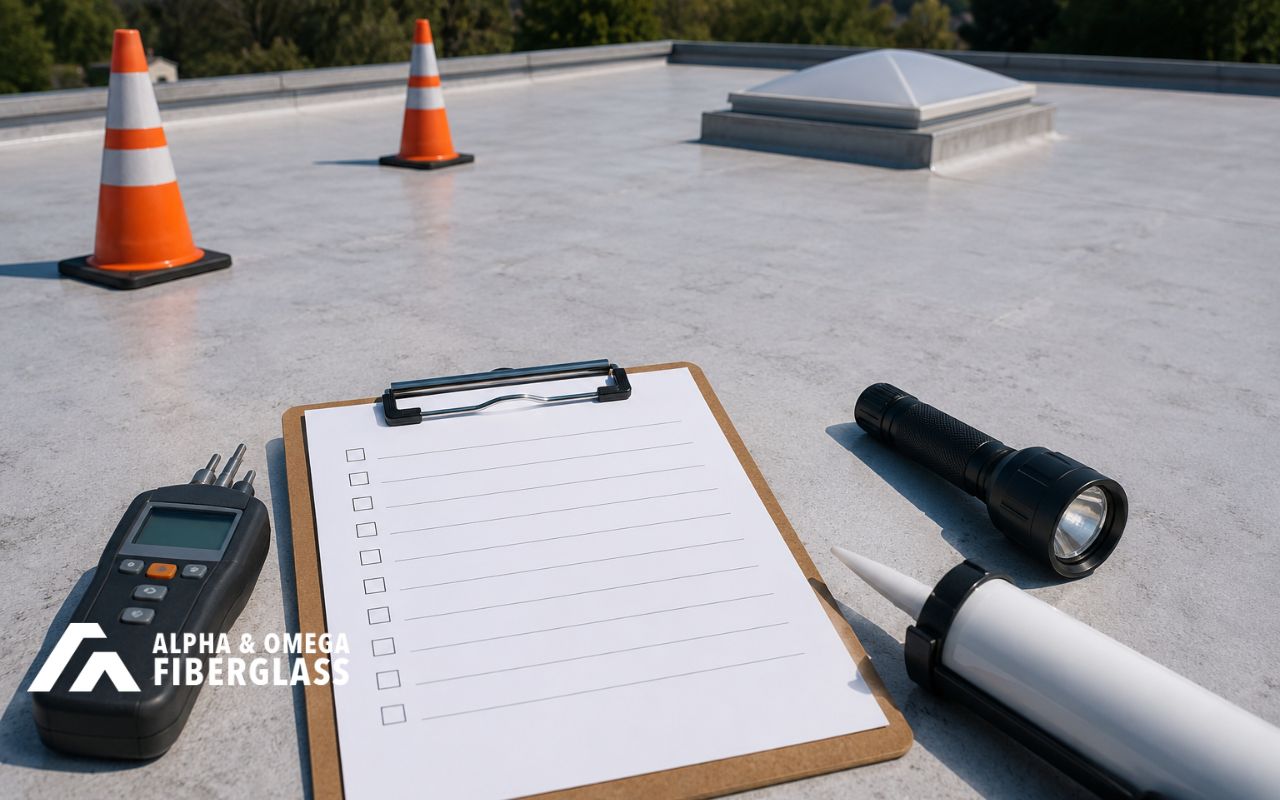
When Should Your Fiberglass Roof Preventive Maintenance Schedule Start?
Small roof issues can hide until rain finds the weak spot. For homeowners who want fewer surprises, a clear Fiberglass Roof Care Plan helps turn roof care into a simple routine. At Alpha & Omega Fiberglass, we focus on early checks, clear notes, and practical next steps.
When Should Your Fiberglass Roof Preventive Maintenance Schedule Start?
A fiberglass roof preventive maintenance schedule should start before leaks appear. The best plan uses routine checks, seasonal roof inspections, and documented roof service intervals to catch cracks, soft spots, drainage problems, and worn sealant before water enters the home.
Routine fiberglass roof care includes cleaning the surface, checking seams, reviewing flashing, and watching for moisture signs. Homeowners need this schedule when they want to protect roof strength, reduce leak risks, and understand when a small concern needs professional attention.
Protects Fiberglass Roofing Before Small Leaks Spread
Preventive care protects a fiberglass roof by finding weak spots before water moves below the surface. Small cracks, loose edges, and blocked drainage can grow after storms. Therefore, early maintenance gives homeowners more control over repairs and roof performance.
A fiberglass roof preventive maintenance schedule works best when it includes simple visual checks and safe cleaning. Look for stains, bubbles, soft areas, lifting seams, and debris near drains. InterNACHI teaches that roof inspections should review visible roofing parts, flashing, drainage, and related components, which supports a complete routine.
Check seams around vents and skylights.
Clear leaves from low spots and edges.
Watch for soft spots after heavy rain.
Record cracks, stains, and blistered areas.
Reveal Roof Service Intervals That Match Weather Conditions
Roof service intervals should match the roof age, local weather, and past repair history. A newer roof may need fewer professional checks. However, an older roof or storm-exposed property may need closer review through the year.
For many homes, two planned checks each year are a smart starting point. Spring checks show winter wear, while fall checks prepare the roof before colder weather. After strong wind or heavy rain, add an extra review to look for fresh cracks or lifted sealant.
When customers contact Alpha & Omega Fiberglass, we ask about roof age, visible damage, drainage concerns, and recent weather. That information helps us explain whether the next step is cleaning, monitoring, sealing, or a closer inspection.
Spring: review winter damage and drainage.
Summer: watch UV wear and surface fading.
Fall: remove leaves before moisture builds.
After storms: check edges, seams, and gutters.
Schedule Seasonal Roof Inspections With Clear Checkpoints
Seasonal roof inspections make roof care easier because each season has different risks. Spring often reveals cracks and staining. Fall often brings leaves and clogged drainage. A clear checklist keeps each inspection focused and useful.
Use a calm, dry day for roof checks whenever possible. Avoid walking on unsafe surfaces, and never step onto a roof when conditions feel risky. Instead, use binoculars from the ground or request a professional review. Our Fiberglass Roof Inspection Checklist can help homeowners understand what to look for.
With Alpha & Omega Fiberglass, homeowners get practical guidance before work begins. We explain what we see, why it matters, and which concerns should be handled first to reduce water entry risk.
Identify Weak Areas Before Repairs Become Larger
Weak areas usually form around seams, flashing, roof penetrations, and places where water sits. These spots need close attention because movement, moisture, and sun exposure can wear down sealant and fiberglass surfaces over time.
Look for blistering, hairline cracks, peeling sealant, dark marks, and areas that feel uneven. Also check gutters and scuppers, because poor drainage can keep water on the roof longer than needed. University of Minnesota Extension notes that flashing and drainage details help direct water away from the building, which is important for leak prevention.
A careful log helps track repeat concerns. If the same area needs attention each season, ask a fiberglass roof maintenance company to review the cause. The right plan should address the source, not only the visible mark.
Hairline cracks near seams
Blisters caused by trapped moisture
Loose or peeling sealant
Stains near walls or edges
Debris blocking drainage paths
Prepare Each Maintenance Appointment With Simple Records
A well-prepared appointment helps the roof team understand what changed since the last review. Photos, dates, weather notes, and repair history can point to patterns. This makes the inspection more useful and easier to explain.
During appointments with Alpha & Omega Fiberglass, we review the concern, inspect visible roof areas, and explain practical options. We do not guess about work that cannot be seen. Instead, we guide customers through the safest next step based on the roof condition.
Share roof age and known repair history.
Show photos of stains, leaks, or cracks.
Point out areas where water collects.
Ask which tasks need monitoring or repair.
Keep the final notes for the next check.
For a broader planning tool, review our Roof Maintenance Checklist before booking a review.
Frequently Asked Questions
How often should a fiberglass roof be inspected?
Most fiberglass roofs should be checked at least twice each year, with extra checks after strong storms. Older roofs, shaded roofs, or roofs with drainage issues may need closer attention. A consistent fiberglass roof preventive maintenance schedule helps catch small changes before leaks develop.
What should homeowners check during seasonal roof inspections?
Homeowners should look for cracks, stains, blistering, loose sealant, blocked drains, and debris. Safe ground-level checks are helpful when roof access is risky. For more guidance, use our Fiberglass Roof Questions page before planning the next step.
Can small fiberglass roof cracks wait until later?
Small cracks should not be ignored because water can move below the surface. Some marks may only need monitoring, while others need repair. A professional review helps decide whether cleaning, sealing, patching, or further inspection is the safest choice.
Who should create my roof service intervals plan?
A homeowner can start with a simple calendar, but a specialist can adjust the plan to roof age, drainage, weather exposure, and past problems. To understand available support, visit our Fiberglass Roofing Services page.
When should I contact a fiberglass roof maintenance company?
Contact a fiberglass roof maintenance company when you see stains, recurring cracks, soft areas, or standing water. To speak with Alpha & Omega Fiberglass, use our Contact Our Roofing Team page and share photos when possible.
Strengthen Roof Protection With A Clear Maintenance Plan
A dependable fiberglass roof preventive maintenance schedule keeps roof care simple, timely, and easier to track. At Alpha & Omega Fiberglass, we help homeowners understand warning signs, plan roof service intervals, and decide when seasonal roof inspections are needed. Start with a documented checklist, then Request Roofing Guidance before damage gets worse.
