





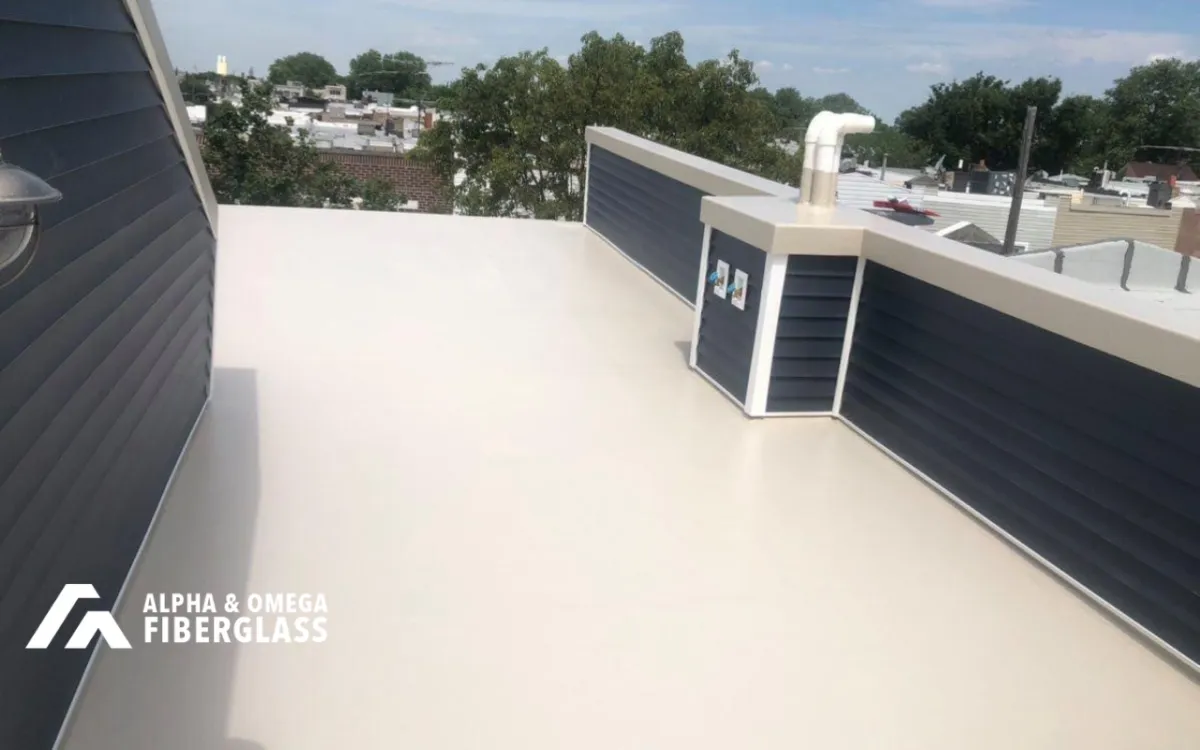
Fiberglass Roof Around HVAC Curbs: Preventing Leaks & Noise | Alpha & Omega Fiberglass
A fiberglass roof around HVAC curbs can fail fast when details are rushed. However, you can prevent leaks, noise, and early cracking with the right steps. This guide explains curb setup, curb flashing, and fastener sealing. Moreover, it covers vibration isolation and heat shields. With Alpha & Omega Fiberglass, you can plan smarter and protect your building long term.
What are the most important steps for a fiberglass roof around HVAC curbs to prevent leaks and noise?
The most important steps for a fiberglass roof around HVAC curbs are a level curb, continuous curb flashing, and consistent fastener sealing. Additionally, you should add vibration isolation to reduce movement and protect joints. Finally, install heat shields near hot components to prevent sealant and coating damage. When these details work together, the fiberglass roof around HVAC curbs stays watertight and quiet.
Why curb alignment matters before any fiberglass work
First, treat the curb as the foundation for the fiberglass roof around HVAC curbs. Therefore, the curb must sit level and square on the deck. Otherwise, water can pond and push into seams.
First, confirm the curb is level in both directions.
Next, verify corners are square, because small twists create gaps.
Also, check deck condition, so fasteners bite into solid structure.
Finally, choose curb material that fits the building and climate.
Moreover, stable attachment helps the fiberglass roof around HVAC curbs resist wind uplift. Consequently, correct fastener spacing reduces movement and future leaks.
If you want a transparent installation roadmap, review Step-by-Step Fiberglass Roofing Process for Lasting Protection. Then, you can match curb prep to each project phase with Alpha & Omega Fiberglass.
Flashing and fasteners that keep water out at penetrations
Next, build a continuous water path away from the curb. Therefore, curb flashing should wrap the curb face and integrate under field materials. Also, overlaps should shed water downward, not behind the metal.
Use corrosion-resistant curb flashing where possible.
Then, overlap pieces so water always runs over the next layer.
Also, seal fastener heads immediately, because each hole is a pathway.
Finally, recheck corners, since corners fail first.
Moreover, fastener sealing needs the right sealant for fiberglass and metal. Therefore, clean and dry surfaces before application. Then, tool the bead to remove air pockets.
To understand common failure points, read Fiberglass Roof Leak Causes Around Curbs and Drains. After that, you can spot risky details around a fiberglass roof around HVAC curbs earlier.
Vibration and heat control that protects joints and coatings
HVAC vibration can fatigue details over time. Therefore, vibration isolation reduces stress on curb flashing and sealant lines. Also, it lowers noise transfer into occupied spaces.
Use neoprene pads for lighter equipment when appropriate.
However, use spring isolators for heavier units and low-frequency vibration.
Also, distribute loads evenly, so the unit stays level.
Finally, confirm restraints meet wind requirements in your area.
Heat exposure can also age materials quickly. Therefore, heat shields help protect coatings and sealants near hot components. Also, a small air gap behind the shield improves performance.
Consequently, a fiberglass roof around HVAC curbs lasts longer when vibration isolation and heat shields are planned from day one. If you need help selecting details, Alpha & Omega Fiberglass can guide the full assembly.
How to build a durable curb detail step by step
Use this sequence to reduce mistakes and callbacks. Therefore, follow the order and document each checkpoint.
First, inspect the deck and repair soft areas before curb work.
Next, set the curb level and secure it with correct fasteners.
Then, install curb flashing with proper laps and clean edges.
Also, apply fastener sealing at every penetration immediately.
After that, install fiberglass layers and finish transitions neatly.
Finally, add vibration isolation and heat shields before startup.
Moreover, schedule a final water test if conditions allow. Then, record photos for future maintenance.
For ongoing care, use What is a fiberglass roof maintenance plan, and how do you build one for long-lasting care?. As a result, the fiberglass roof around HVAC curbs stays reliable year-round.
Service-area support for fiberglass roofing projects
If you manage multiple sites, local support matters. Therefore, Alpha & Omega Fiberglass offers guidance for planning and repairs across nearby areas.
For Montgomery County needs, see Discover Fiberglass Roofing in Norristown, PA Today.
For Chester County projects, explore Discover Fiberglass Roofing in Phoenixville, PA Today.
For urgent situations, review Emergency Fiberglass Roof Repair Philadelphia Services.
Moreover, consistent service helps standardize curb flashing and fastener sealing across buildings. Consequently, your fiberglass roof around HVAC curbs performs more predictably.
FAQs
How do I stop leaks where the unit meets the curb?
First, confirm the curb is level, because ponding drives leaks. Then, install continuous curb flashing and maintain clean overlaps. Also, apply fastener sealing at every screw head. For common causes and fixes, see Fiberglass Roof Leak Causes Around Curbs and Drains.
Which sealant works best for seams and fasteners?
Choose a sealant that bonds to fiberglass and stays flexible in sun and cold. Therefore, follow the manufacturer prep steps and cure times. Also, tool the bead to remove voids. For a structured, proven workflow, use Step-by-Step Fiberglass Roofing Process for Lasting Protection.
Do I really need vibration isolation on rooftop units?
Yes, because vibration can loosen fasteners and fatigue seals over time. Therefore, vibration isolation helps protect curb flashing and transitions. Also, it can reduce interior noise. If you are troubleshooting recurring issues, start with an inspection plan from What is a fiberglass roof maintenance plan, and how do you build one for long-lasting care?.
How do heat shields help around rooftop equipment?
Heat shields reduce radiant heat reaching fiberglass and sealants. Therefore, they can slow coating wear and premature drying. Also, an air gap behind the shield improves protection. When you combine heat shields with careful curb details, the fiberglass roof around HVAC curbs stays stronger.
What should I do if I notice a sudden leak after a storm?
First, contain water and protect safety, because time matters. Then, apply a temporary dry-in if conditions allow. Also, document photos for repair planning. For a clear checklist, follow What should you do first during a fiberglass leak to prevent bigger damage?, and then contact Alpha & Omega Fiberglass.
Next steps for a quieter, longer-lasting roof assembly
When you apply these details, you reduce rework and extend service life. Therefore, plan curb flashing, fastener sealing, vibration isolation, and heat shields as one system. Also, schedule inspections so small issues stay small. If you want project guidance, reach out to Contact Alpha & Omega Fiberglass in Philadelphia. With Alpha & Omega Fiberglass, your fiberglass roof around HVAC curbs can stay dry, stable, and dependable.
Moreover, if you manage properties across the region, Alpha & Omega Fiberglass can help align standards site to site. Consequently, a fiberglass roof around HVAC curbs becomes easier to maintain and easier to trust.
