





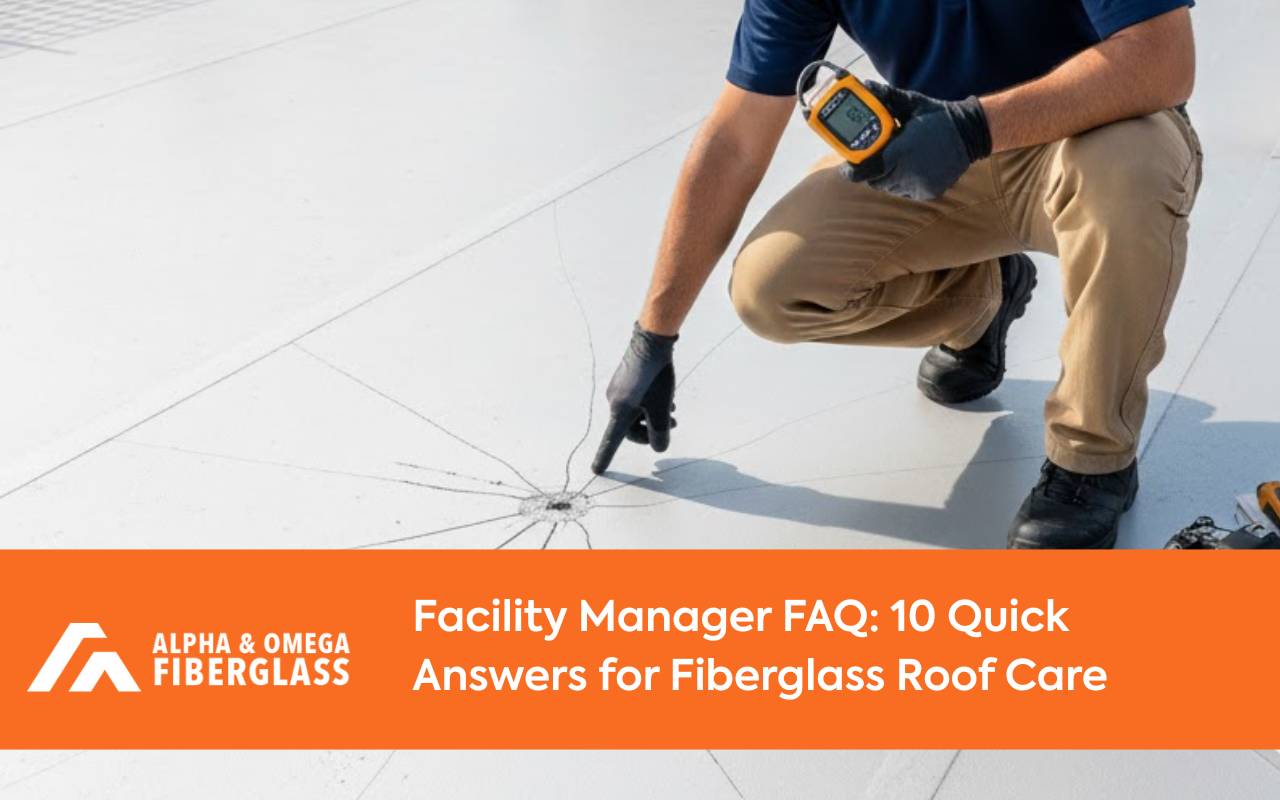
Facility Manager FAQ: 10 Quick Answers for Fiberglass Roof Care
Our facility manager faq fiberglass guide gives you ten quick answers about everyday fiberglass roof care. As a facility manager, you know the roof protects every room, asset, and person underneath. Yet fiberglass maintenance often feels confusing or easy to postpone. This FAQ highlights cleaning schedules, topcoat touch-ups, and simple steps that keep your system performing well.
With the right information, you can handle fiberglass roof care with confidence instead of guesswork. Regular inspection cadence, strategic traffic pads, and timely topcoat work all extend service life. Whether you manage a large campus or a single site, these quick answers fit real-world facility challenges.
Importance of Fiberglass Roof Maintenance
Proper fiberglass roof maintenance protects the building structure and prevents expensive repairs later. By following our facility manager faq fiberglass checklist, you catch small issues before they become major leaks. Weather, UV exposure, and debris slowly wear down the surface if no one is watching.
Good upkeep also supports energy efficiency inside the building. A clean, bright surface reflects sunlight better, reducing heat gain and lowering cooling loads. If you ignore care, cracks and blisters can form, letting moisture reach insulation and interior spaces.
Cleaning Schedule for Fiberglass Roofs
An organized cleaning schedule is the backbone of fiberglass roof maintenance. Most facilities benefit from semi-annual cleaning in spring and fall, with extra visits in dusty or industrial areas. Adjust timing for local weather, tree cover, and how often rooftop equipment needs service.
During each visit, follow a simple routine pulled from this facility manager faq fiberglass checklist. Gentle methods protect the surface while revealing early warning signs.
Remove loose debris with a soft broom or blower.
Apply mild detergent and water with low-pressure equipment.
Rinse thoroughly so no soap film remains.
Note stains, cracks, or ponding areas for follow-up.
Conducting Topcoat Touch-Ups
Topcoat touch-ups act like sunscreen for your fiberglass roof. Over time, sun and weather thin the coating, opening small paths for water and UV damage. Plan a professional review every three to five years, or sooner in harsh climates.
Before adding fresh topcoat, the surface must be clean, dry, and sound. Remove loose material, repair any blisters, then apply the coating in even passes to the recommended thickness. These touch-ups renew waterproofing and restore reflectivity, which helps control interior temperatures.
Regular Inspection Cadence
A clear inspection cadence keeps surprises off your maintenance list. Quarterly walk-throughs work well for many buildings, with extra checks after heavy storms or equipment changes. Use the facility manager faq fiberglass plan as a guide when deciding what to review each season.
During inspections, focus on seams, penetrations, flashings, and any stained areas below roof level. Document findings in a simple log so patterns, recurring issues, and warranty items are easy to track.
Strategic Placement of Traffic Pads
Traffic pads shield the fiberglass surface from scuffs caused by frequent foot traffic. They are essential near units, access points, and other busy areas on commercial roofs.
Plan safe paths that guide everyone across the roof without stepping on unprotected fiberglass. Well-designed layouts protect the membrane and reduce trip hazards for technicians and vendors.
Place pads from roof hatches to main equipment.
Surround service sides of large HVAC or air-handling units.
Choose non-slip materials that perform in wet conditions.
Inspect pads and replace any that crack or shift.
Extending Fiberglass Roof Lifespan
Extending a fiberglass roof's lifespan depends on prevention, not crisis response. Control roof loads by avoiding heavy storage on the membrane and using proper support blocks under equipment. Keep drains clear, trim overhanging branches, and monitor nearby construction that might drop debris.
For complex layouts or aging systems, partner with specialists who understand every layer of a fiberglass roof. They can coordinate roof work with exterior improvements, including entry and storm door installation that keeps water away from entrances.
Key Considerations for Commercial Complexes
Large commercial complexes often include wide, open roof areas with many penetrations and heavy rooftop equipment. These systems need careful scheduling so cleaning, inspections, and repairs do not disrupt tenants or operations.
Work with experienced fiberglass teams who have managed big projects, such as fiberglass roofing in Upper Darby, PA. Clear scopes, safety plans, and communication channels keep complex maintenance programs on schedule and within budget.
Practical Advice for Smaller Facilities
Smaller facilities usually need simpler plans, but the basics still matter. Many managers follow a semi-annual cleaning schedule with two detailed inspections each year. You can handle light cleaning in-house and call specialists only for coatings, repairs, or major leaks.
Keep a simple log that tracks dates, findings, photos, and actions taken. This record supports warranties and makes future budgeting easier when roof sections eventually need bigger work.
Streamlining Fiberglass Roof Maintenance Efforts
Streamlined fiberglass maintenance saves money and time while reducing emergency calls. Start with a yearly calendar that combines your cleaning schedule, inspection cadence, and planned topcoat projects.
Use facility software or simple reminders so nothing from your facility manager faq fiberglass plan slips through the cracks. Standard checklists for each task help staff work safely and consistently, even when team members change.
Create step-by-step cleaning and inspection checklists.
Train staff on safe roof access routes and traffic pads.
Store photos and notes from each visit in one shared folder.
Set up service agreements with trusted fiberglass contractors.
Frequently Asked Questions
These quick questions summarize the core points from our facility manager faq fiberglass checklist. Use them as a fast reference between full inspections or service visits.
How often should I clean a fiberglass roof?
Most facilities do well with cleaning twice a year, in spring and fall. However, dusty or industrial areas may need quarterly cleaning. Always adjust your schedule after major storms or nearby construction.
When do I need topcoat touch-ups?
Plan a professional review every three to five years. If you notice dull, chalky areas or fine surface cracking, schedule topcoat touch-ups sooner. Early action keeps water and UV damage from reaching deeper layers.
Where should traffic pads be installed?
Install pads along common walking routes, from access points to equipment. Additionally, place pads around service sides of units and near controls technicians use often. This strategy protects the membrane where footsteps concentrate.
What inspection cadence works best for most facilities?
Quarterly visual inspections fit many buildings. Add extra checks after strong winds, hail, or heavy snow. During each visit, focus on seams, penetrations, flashings, and any interior stains that suggest hidden leaks.
Can my team handle maintenance in-house?
Your staff can manage basic cleaning, simple checks, and record keeping. However, use trained fiberglass contractors for repairs, topcoat applications, and complex details. This balance keeps costs reasonable while protecting warranties and safety.
Ensuring the Longevity of Your Fiberglass Roof
Long-lasting fiberglass roofs result from many small actions done on time, not one dramatic repair. Stick to your cleaning schedule, maintain a steady inspection cadence, and schedule topcoat work before coatings fail. Protect busy paths with traffic pads and limit heavy loads on the membrane whenever possible.
If you need help planning or reviewing your program, reach out through the contact page for expert support. With consistent care, your fiberglass roof can protect people, equipment, and operations dependably for many years.
