





What Safety Plan Do You Need for Fiberglass Roofing Projects?
A clear roof safety plan, fiberglass keeps every person on the roof safer from day one. Fiberglass roofing work looks simple, yet it mixes heights, heavy panels, and strong chemicals. Together, these create serious risks that demand careful planning before anyone climbs a ladder.
Therefore, a good plan covers fall protection, hazard communication, daily Job Hazard Analyses, and strong perimeter controls. These steps turn a risky work area into an organized space. In this way, every worker understands the dangers, follows the same rules, and goes home safely after each shift.
Importance of Safety Plans in Fiberglass Roofing Projects
A roof safety plan for fiberglass starts with seeing how dangerous roof work can be. Fiberglass sheets are large, sometimes flexible, and roofs may be steep or dusty. Because of this, slips and trips are common if hazards are not checked before work begins.
A clear plan explains how to use fall protection, share hazard information, and set perimeter controls. It also supports an organized fiberglass roofing process from preparation to clean up. When everyone knows their role, crews work faster, with fewer delays due to confusion or unsafe conditions.
Understanding Fall Protection Measures
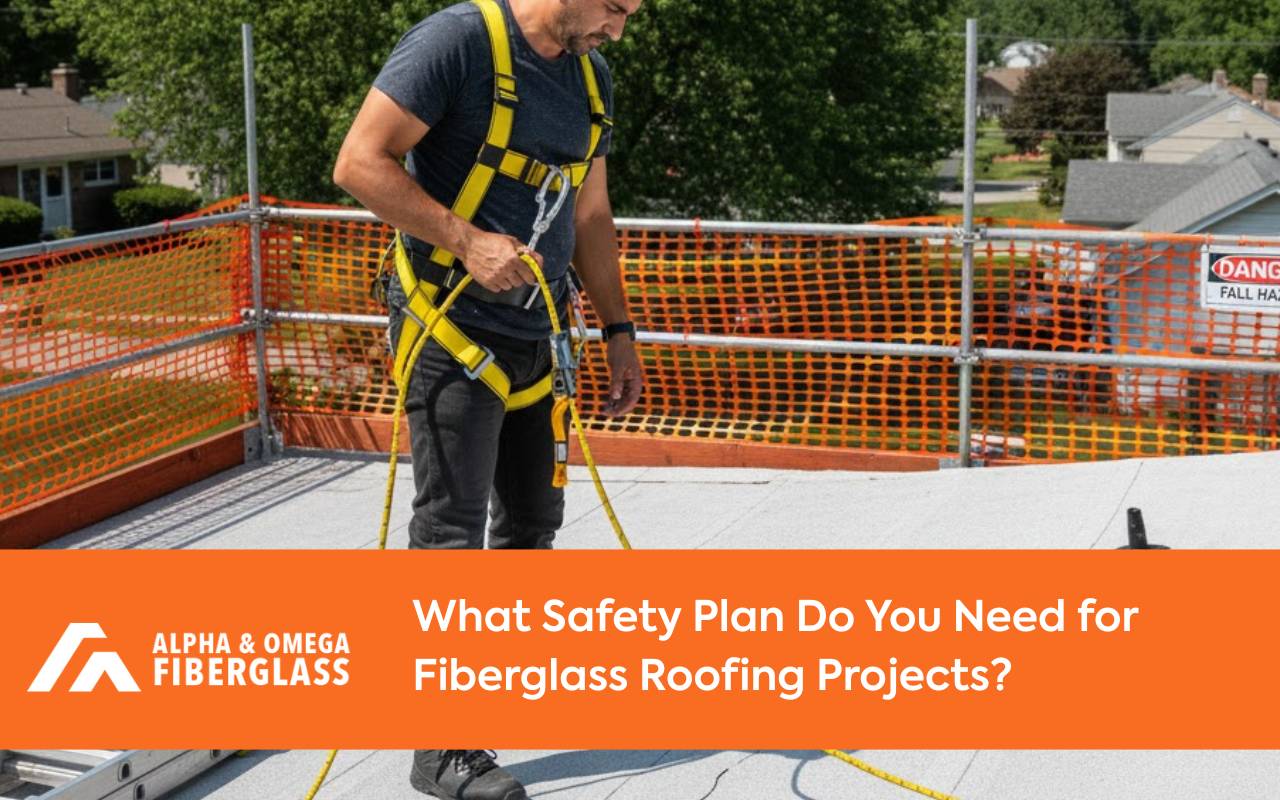
Effective fall protection keeps roof edges from turning into serious hazards. Guardrails, safety nets, and personal fall arrest systems stop a slip from becoming a major injury. In addition, the safety plan should mark where to place perimeter controls around edges, skylights, and roof openings.
Teams should review where workers must tie off and how to check anchor points. Simple habits, like inspecting harness straps and connectors every day, prevent equipment failure. When these checks feel natural, workers can focus on installation tasks instead of worrying about their gear.
Install guardrails where workers walk or handle materials.
Use lifelines and harnesses near all roof edges.
Secure ladders on firm, level ground before climbing.
Keep walkways clear of tools and loose debris.
Implementing Effective Hazard Communication
Clear hazard communication helps everyone understand the risks of resins, solvents, and adhesives used in fiberglass roofing. First, each container should have a readable label. Next, safety data sheets must stay available on site, so workers can quickly check the dangers and safe handling steps.
Warning signs near mixing areas and ventilation zones remind crews about fumes or flammable materials. Color-coded tags can highlight contaminated zones or waste bins. Regular talks during morning meetings keep information fresh and encourage workers to speak up when they see new or changing hazards.
Label all chemical containers with names and warnings.
Store safety data sheets in an easy-to-find binder or tablet.
Post signs where fumes may build up or drift.
Train workers to report spills and unsafe smells right away.
Developing Comprehensive Job Hazard Analyses (JHA)
Adding a daily JHA to your plan means reviewing the site before tools come out. The crew breaks each task into simple steps. Then, they list possible hazards, such as unstable ladders, strong winds, or overhead power lines that sit close to the roof edge.
Once hazards are listed, the team chooses controls that fit that day’s conditions. They might move material stacks, change ladder placement, or delay work when winds are strong. Writing these points down improves accountability and shows that safety choices are based on real conditions, not guesswork.
Ensuring Proper Training for Workers
Training works best when it is hands-on and clear. Instead of only reading rules, workers should physically install guardrails, clip into lifelines, and move fiberglass panels under guidance. This practice builds confidence and muscle memory for real job sites.
Refresher sessions keep skills sharp and introduce new tools or procedures. Simple language avoids confusion for workers with different backgrounds. Well-trained crews know how to react when they spot missing perimeter controls or unsafe ladders, and they feel comfortable pausing work until the issue is fixed.
Utilizing Personal Protective Equipment (PPE) Correctly
Standard PPE for fiberglass roofing includes helmets, gloves, safety glasses, and non-slip boots. When workers cut or grind fiberglass panels, respirators and full-coverage clothing help keep glass fibers off the skin and out of the lungs, which prevents irritation and breathing problems.
Daily PPE checks are just as important as wearing the gear. Workers should look for cracked helmets, torn gloves, and worn-out boot soles. They must also confirm respirator filters are clean. Under a strong roof safety plan, fiberglass, and PPE become a daily habit rather than an afterthought.
Maintaining Equipment and Tools Regularly
Roof work depends on tools that function reliably. Regular checks of saws, drills, extension cords, and ladders reduce the chance of sudden failure. Even simple tools, like utility knives, should be inspected often to avoid slips caused by dull blades or loose handles.
When workers notice damage, they should tag the tool out of service and request a replacement. This habit lowers the risk of injuries and keeps fiberglass roof repair tasks moving smoothly. It also supports long-term quality for every project, from large roofs to detailed trim work.
Emergency Response Procedures for Fiberglass Roofing Projects
Even with strong prevention, emergencies can still happen. Therefore, the plan must describe how to respond quickly. Crews need to know evacuation routes, first-aid locations, and who is trained in CPR or first aid before work begins.
Drills help workers practice what to do if someone falls or has a chemical exposure. Steps may include stopping work, securing the area, and using fall protection systems to lower an injured worker safely. When everyone understands the procedure, they can act calmly during real events.
Mark clear evacuation routes on site maps.
Assign trained first-aid responders for each shift.
Practice fall rescue drills on a regular schedule.
Store emergency numbers in phones and on posted signs.
Regular Safety Inspections and Audits
Routine inspections make sure the roof safety plan for fiberglass continues to work throughout the project. Supervisors or outside auditors can walk the site, checking guardrails, ladder setups, and the use of PPE. Both scheduled and surprise visits give an honest view of daily habits.
Each audit should record what is working well and what needs fixing. Assigning follow-up tasks prevents problems from repeating. Over time, the records highlight trends, such as tasks that often need extra fall protection, which helps refine procedures for future fiberglass roofing projects.
Frequently Asked Questions
What is the main goal of a fiberglass roof safety plan?
The main goal is to protect workers from falls, chemical exposure, and other hazards while keeping the project on track. It outlines how to use fall protection, share hazard information, complete daily JHAs, and respond to emergencies without delay or confusion.
Who is responsible for creating and updating the safety plan?
Usually, the employer or project supervisor writes the plan with help from safety professionals. However, workers also have a role. They provide feedback about real conditions on the roof and report new hazards. For guidance, you can contact our fiberglass roofing team and discuss your project needs.
How does a safety plan support fiberglass roofing in Cherry Hill, PA?
Local projects, such as fiberglass roofing in Cherry Hill, PA, face changing weather, tight neighborhoods, and busy streets. A solid plan manages these factors by setting clear rules for access, material storage, and fall protection. This structure keeps workers safe while respecting nearby homes and businesses.
Why should I worry about entry points and doors during roof work?
Entry points often sit below ladders or material paths. Poor control can put building occupants at risk from falling objects. Coordinating with any entry and storm door installation on the same property helps keep walkways clear and reduces crowding beneath active roof areas.
How does the safety plan relate to roof repairs, not just new roofs?
Repairs can be even trickier than new installations because existing damage may weaken surfaces. A strong plan guides safe access to problem areas and protects workers while they perform fiberglass roof repair services. It also ensures job steps, tools, and chemicals match the condition of the existing structure.
Ensuring a Safe and Successful Fiberglass Roofing Project
By combining fall protection, hazard communication, daily JHAs, and worker training, a roof safety plan with fiberglass supports both safety and efficiency. These elements work together to reduce risks from heights, heavy materials, and chemicals.
Ongoing inspections, tool maintenance, and emergency drills keep the plan active instead of forgotten. As each project finishes safely, the lessons learned help refine plans, improving protection for every fiberglass roofing crew and every property they serve.
